Historic village
Misty mornings and historic sandstone turrets in a verdant coastal valley
Tucked between the Southern Highlands and the coast, this lush enclave is anchored by Australia’s last wooden suspension bridge. Beyond the historic village, the landscape unfolds into a patchwork of dairy pastures, rainforest, and quiet river reaches.
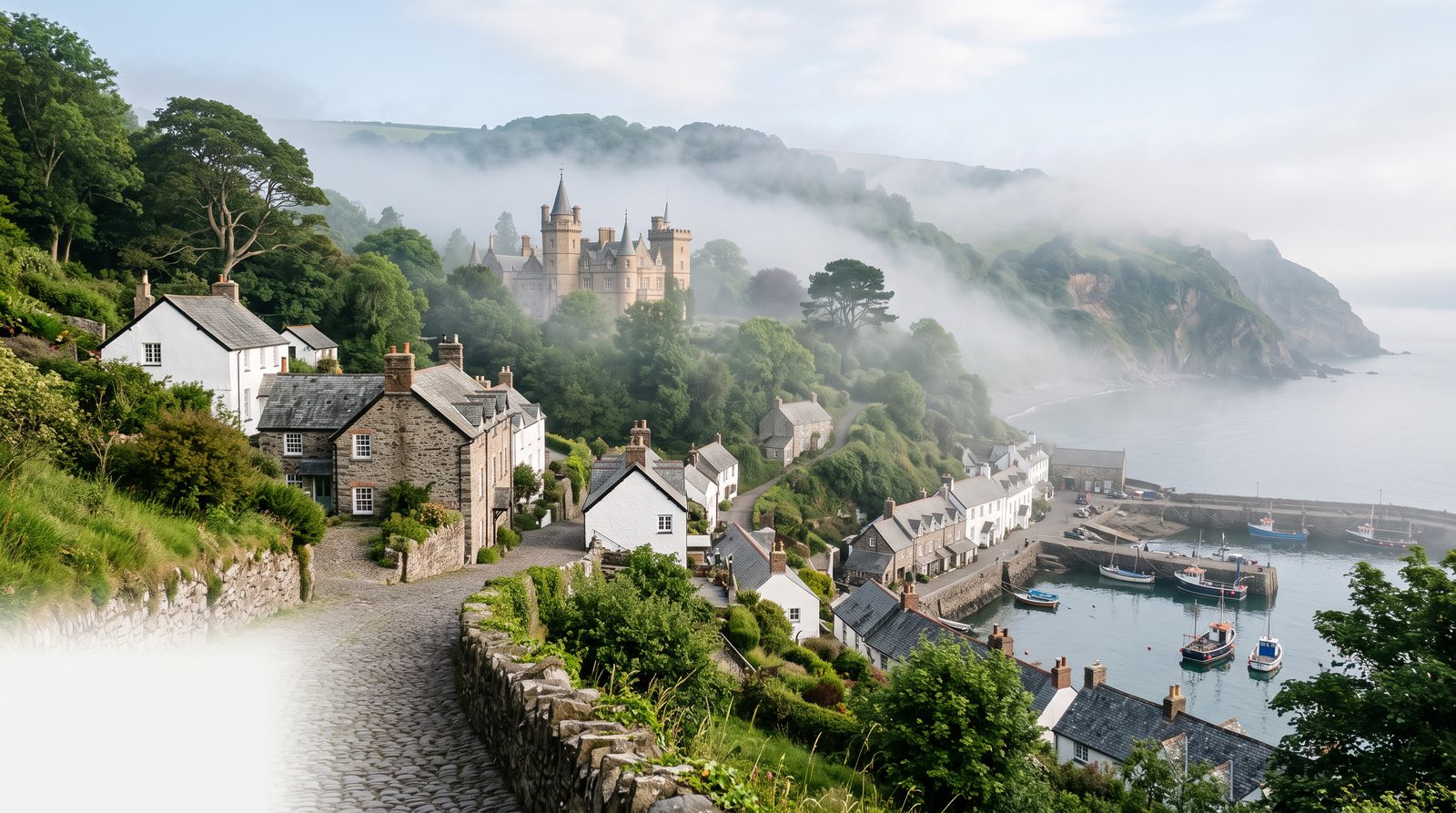
Kangaroo Valley occupies a unique geological niche, a deep green bowl carved into the sandstone of the New South Wales South Coast. To reach it, travelers must descend through steep, winding passes that drop away from the Southern Highlands or rise sharply from the coastal plains. This physical isolation has preserved a specific kind of quiet, distinct from the busier tourist corridors of the coast. The air here is often heavy with moisture, trapped by the surrounding escarpments, creating a microclimate where vegetation remains vibrantly green even when surrounding regions are dry. Arriving in the valley floor feels like entering a different tempo of time, where the scale of the landscape—the towering cliffs and the broad, slow river—dictates the pace of movement. It is a verdant sanctuary held within the rugged embrace of the Great Dividing Range.
The architectural centerpiece of the valley is the Hampden Bridge, a structure that serves as both a functional crossing and a historical monument. Completed in 1898, it remains Australia’s last surviving wooden suspension bridge, a feat of Victorian engineering that feels remarkably integrated into its environment. Its most striking features are the four massive sandstone turrets, built in a Gothic Revival style that evokes a medieval fortress. These turrets, weathered by over a century of river mist, anchor the thick cables that suspend the wooden deck above the Kangaroo River. Crossing the bridge is a sensory experience; the slight sway of the structure and the rhythmic sound of tires on the timber planks provide a tangible connection to the nineteenth-century infrastructure that first opened this valley to the wider world.
The village of Kangaroo Valley is a study in preservation and restraint. Unlike many historic towns overtaken by modern development, the main street retains a cohesive architectural character, dominated by sandstone and timber buildings dating back to the late 1800s. There is a sense of permanence in the local architecture, from the sturdy post office to traditional storefronts that have served the community for generations. The village does not feel like a museum; it is a living settlement where heritage is used daily. Gardens are filled with cool-climate flora, reflecting the valley’s unique position between the mountains and the sea. Visitors walking the town will notice fine details—wrought-iron lacework, deep verandas designed for shade, and the way buildings seem to lean into the landscape rather than dominate it.
The Kangaroo River is the lifeblood of the valley, a winding waterway flowing through the heart of the region before joining the Shoalhaven. Its reaches are remarkably quiet, particularly in the early morning when the water is smooth as glass and the only sound is the occasional splash of a water bird or the rustle of wind in the river oaks. For those who explore by kayak, the perspective changes entirely. From the water, the valley feels even more secluded, the high banks and overhanging trees creating a green tunnel that shuts out the rest of the world. The river is not a torrent but a slow, deliberate presence, moving with a patience that mirrors the valley’s own rhythm. It provides a habitat for diverse aquatic life and reflects the dramatic sandstone cliffs above.
Beyond the village, the valley floor opens into a patchwork of dairy pastures, a testament to the region’s long agricultural history. Rich volcanic soils and reliable rainfall have made this one of the most productive dairy regions in the state. The sight of cattle grazing against a backdrop of deep green hills is a defining image of the valley. These pastures are crisscrossed by old timber fences and lined with rows of trees that act as windbreaks, creating a landscape that feels both managed and wild. There is a specific beauty in the order of the farmland, a functional geometry that contrasts with the jagged lines of the surrounding wilderness. The dairy industry here is the foundation of the community’s identity, a tradition of land stewardship passed down through families for over a century.
As the land rises away from the river, vegetation shifts into dense subtropical rainforest. This is a world of ferns, moss-covered rocks, and ancient trees competing for light beneath the canopy. The transition is abrupt, moving from the open light of the fields into the cool, damp shadows of the forest. Secluded trails lead through this wilderness, eventually climbing toward the dramatic escarpment views defining the valley’s perimeter. From these heights, the scale of the valley is revealed—a vast, green depression surrounded by sheer sandstone walls. The biodiversity here is significant, with the forest providing a refuge for numerous species of birds and mammals. The escarpment itself is a geological record, its layers of stone telling a story of millions of years of erosion and uplift, a silent witness to the transformation of the continent.
Kangaroo Valley is perhaps most beautiful in the early morning, when the valley floor is often submerged in thick, white mist. This phenomenon, caused by the cooling of moist air overnight, transforms the landscape into something ethereal. The sandstone turrets of the Hampden Bridge appear to float above a sea of cloud, and the familiar outlines of trees and hills are softened into ghostly silhouettes. As the sun rises, light begins to filter through the mist, creating long, golden rays that illuminate dew-covered pastures. This daily transition from shadow and fog to clear, bright light is a central part of the valley’s character. It is a reminder of the environmental forces that shape this place, a cycle of moisture and warmth that sustains the verdant growth and provides the characteristic atmosphere.
In an increasingly fast-paced world, Kangaroo Valley remains a durable sanctuary of quiet and heritage. It is a place where the natural and the man-made have found a rare balance, where a historic bridge and a wild river coexist within a landscape of enduring beauty. The valley’s strength lies in its consistency—the way the mist returns every morning, the way the river continues its slow journey, and the way the community maintains its connection to the land. It is a destination that offers more than just a scenic view; it offers a sense of perspective, a reminder of the value of preservation and the beauty of the slow, deliberate passage of time. For the traveler who descends into its verdant depths, the valley is a place to pause, to breathe, and to reconnect.