Regional city
Historic Goulburn: a grand inland city blending heritage architecture with modern country soul
As Australia’s first inland city, Goulburn offers a rich tapestry of 19th-century architecture, from the iconic Big Merino to the historic waterworks. Visitors can explore grand cathedrals and galleries before heading to nearby Bungonia National Park.
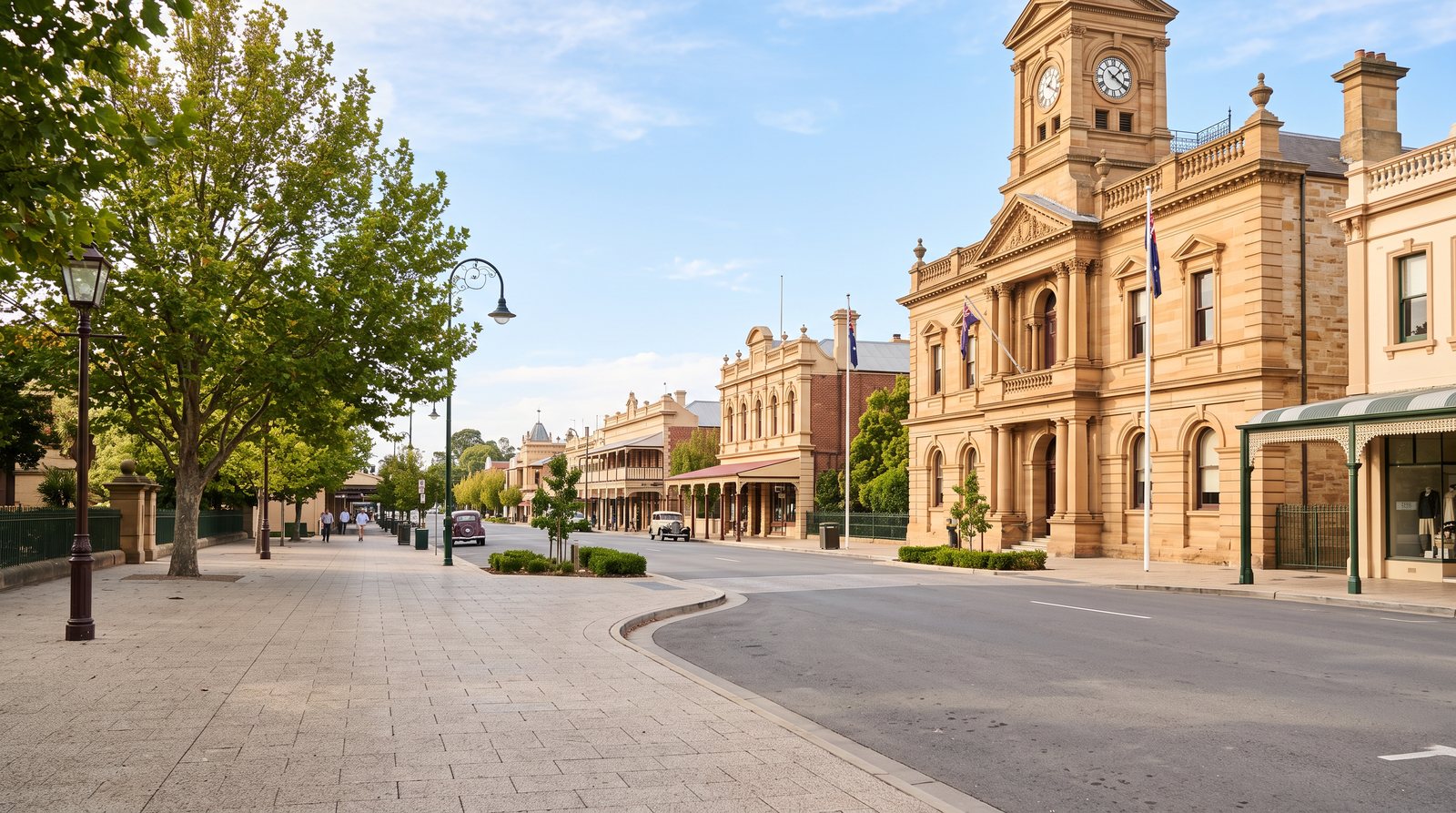
The ascent from the humid coastal basins of New South Wales toward the Southern Tablelands is marked by a distinct shift in both atmosphere and topography. As the elevation climbs, the air thins and cools, revealing a vast, undulating landscape of high-altitude plains where the horizon seems to stretch further than the geography should allow. At the heart of this region lies Goulburn, Australia’s first inland settlement to be granted city status by royal decree in 1863. It was not merely a frontier outpost but a statement of colonial permanence, a grand civic experiment designed to anchor the agricultural wealth of the interior. Today, the approach to the city is still defined by this sense of arrival, where rolling grasslands give way to a skyline punctuated by Victorian spires and the solid weight of 19th-century masonry. It is a place where history is written into the stone of the streets, offering an academic reflection on the transition from a penal colony to a pastoral empire.
The architectural character of Goulburn is defined by a commitment to durability that few regional centers can match. Walking through the central precinct, one is struck by the scale of the Goulburn Court House, a magnificent Italianate design completed in the late 1880s. Its grand facade and intricate stonework were intended to project the authority of the law into the rural heartland, yet there is a grace to its proportions that softens its institutional weight. Nearby, St Saviour’s Cathedral stands as a premier example of Gothic Revival architecture. Designed by Edmund Blacket, the cathedral’s sandstone walls have weathered a century of Tablelands winters, developing a patina that reflects the shifting light of the high plains. The interior, with its soaring ceilings and meticulous woodcarvings, creates a space of profound stillness. These buildings are the functional anchors of a city that continues to inhabit its history with a sense of unhurried dignity.
On the banks of the Wollondilly River, the Goulburn Waterworks provides a visceral connection to the industrial ambitions of the Victorian era. Established in the 1880s to provide a reliable water supply, the facility remains one of the few places where original steam-powered pumping equipment is preserved in its operational setting. The centerpiece is the Appleby Bros. beam engine, a marvel of 19th-century engineering that once hummed with the rhythmic pulse of progress. There is a specific beauty in the functionalism of the Waterworks—the red brick chimneys and heavy iron valves create a sensory archive of a time when technology was understood through the movement of pistons and the hiss of steam. It serves as a reminder that the city’s growth was not just a matter of pastoral success, but a complex feat of engineering that allowed a grand inland society to flourish in a challenging environment.
The legacy of the wool industry provided the economic lifeblood for the Southern Tablelands for generations, a heritage famously embodied by the Big Merino. This 15-meter-tall monument to the fine-wool industry has become a landmark for travelers on the Hume Highway. While such "big things" are often dismissed, the Big Merino represents a genuine historical reality: the region’s climate and soil were uniquely suited to the production of high-quality wool that once clothed the world. The monument, modeled after a celebrated local ram named Rambo, stands as a sentinel over the southern entrance to the city, a concrete testament to the millions of sheep that once grazed these plains. Beyond the statue, the history of wool is found in grand homesteads and old wool stores that have since been repurposed for modern use, illustrating how an entire regional economy was woven from the fibers of a single animal.
While Goulburn is proud of its heritage, it has developed a modern country soul that manifests in a vibrant contemporary art scene. The Goulburn Regional Art Gallery serves as a focal point for this evolution, hosting exhibitions that challenge traditional perceptions of regional life. The city’s main thoroughfare, Auburn Street, is a study in this blending of eras; historic storefronts now house specialty coffee roasters, independent bookstores, and galleries that reflect a sophisticated, urban sensibility. The rhythm of life here favors the quality of the encounter over the speed of the transaction. It is a social environment where heritage architecture provides the backdrop for a forward-looking community, proving that a city can respect its past while actively participating in the cultural currents of the present. This balance creates a unique civic atmosphere where history feels like a living component of the daily routine rather than a distant memory.
A short drive from the historic streets, the landscape undergoes a dramatic transformation at Bungonia National Park. Here, the rolling plains are interrupted by rugged limestone canyons and deep gorges. Bungonia is a place of stark geological drama, where the earth has been carved into vertiginous cliffs and hidden cave systems over millions of years. The lookout points offer spectacular views across slot canyons, where the grey-green canopy of the bush clings to rocky escarpments. For the visitor, the transition from the orderly heritage of Goulburn to the untamed wilderness of Bungonia provides a necessary perspective on the scale of the Australian landscape. It is a reminder that the grand inland city exists on the edge of a vast and ancient geography, a fragile pocket of human order carved out of a terrain that remains stubbornly resistant to total domestication. The park’s hiking trails and limestone formations offer a physical challenge that complements the intellectual exploration of the city.
Ultimately, Goulburn remains a vital gateway, a point of connection between the capital, the coast, and the deep interior. Its significance is not merely historical, but functional; it is a hub that facilitates the movement of people and ideas across the Southern Tablelands. As the sun sets over the high plains, casting long shadows across sandstone facades, there is a sense of continuity rare in the rapidly changing Australian landscape. Goulburn has preserved its grand inland character while adapting to the demands of the 21st century, creating a unique synthesis of heritage and modernity. It stands as a testament to the vision of its founders and the resilience of the community that has maintained it, offering a sophisticated destination for those who seek to understand the heart of regional New South Wales. In the quiet cool of a Tablelands evening, the city feels less like a stop on a journey and more like a destination in its own right, a place where the past is not just remembered, but lived.