Heritage town
Savor the golden harvests and rich heritage of Australia’s cherry capital
Nestled in the Hilltops region, Young is Australia’s cherry capital, where sun-drenched orchards meet a complex gold rush heritage. From the Chinese Tribute Garden to its cool-climate viticulture, the town blends agricultural abundance with historic charm.
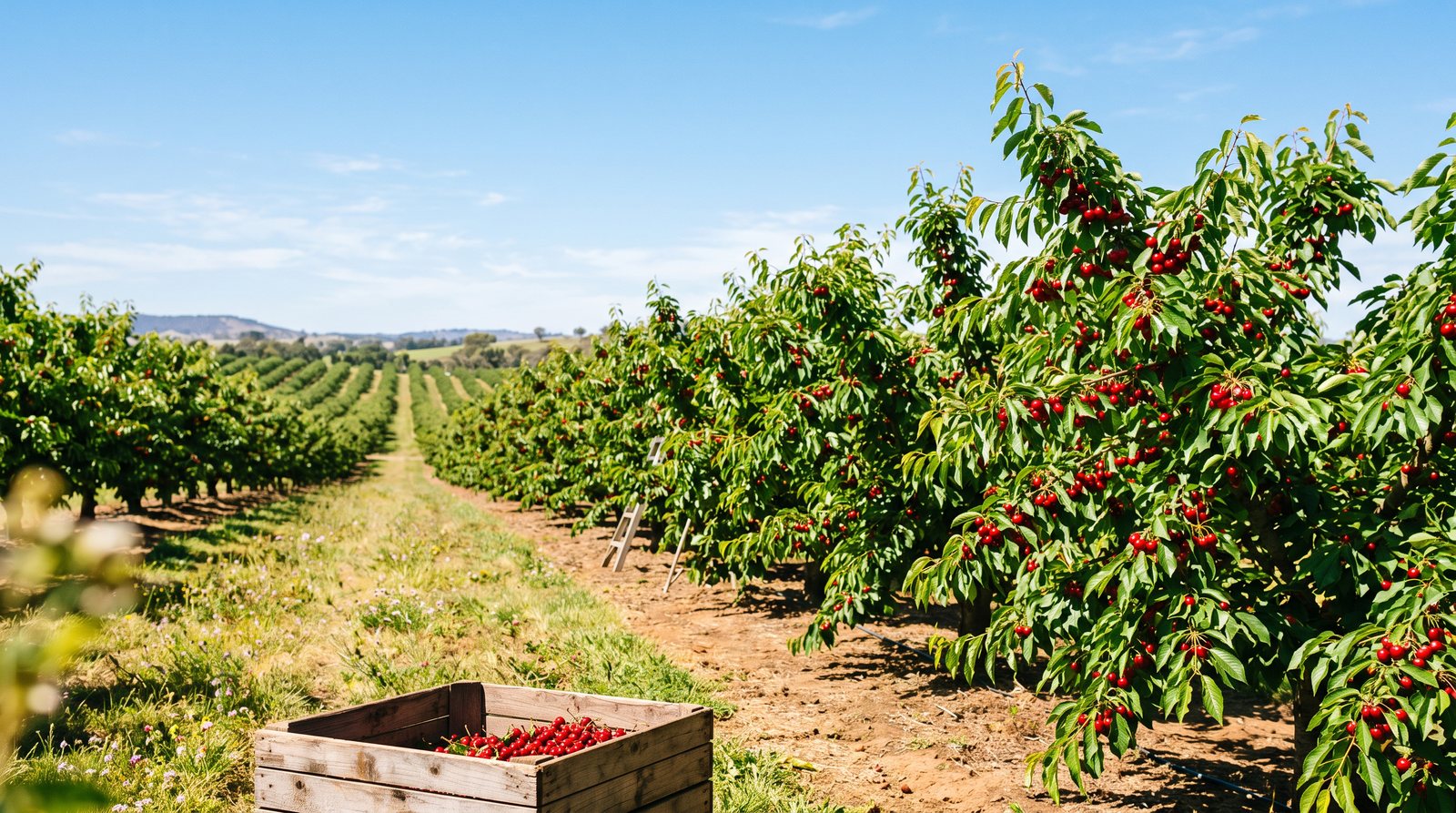
The town of **Young**, situated within the undulating landscapes of the **Hilltops region** in New South Wales, occupies a singular position in the Australian agricultural consciousness. Recognized globally as the **cherry capital of Australia**, this vibrant regional hub is defined by its fertile volcanic soils and a temperate climate that facilitates productive stone fruit cultivation. The approach to the town is marked by vast expanses of ordered orchards, where the rhythmic alignment of cherry trees creates a structured tapestry against the rolling green hills. This geographic setting is the fundamental engine of the town's identity, fostering a community deeply attuned to the seasonal cycles of blossom and harvest. The Hilltops' elevation provides the necessary chill hours in winter and warm summers required for premium fruit development [1].
Young’s agricultural history began with the mid-19th century introduction of cherries, transforming pastoral land into a premier horticultural district. Today, the region produces a significant portion of Australia's cherry crop, featuring varieties from early-season **Supreme** to late-harvest **Lapins**. The harvest, from late October through December, marks a cultural peak as visitors arrive for "pick-your-own" fruit. This direct connection to the land highlights the quality of Hilltops' terroir. Beyond cherries, the region has expanded into **cool-climate viticulture**, with vineyards gaining acclaim for **Shiraz** and **Cabernet Sauvignon**, further establishing Young as a destination for authentic, primary-production-based gastronomic exploration. The slow ripening process results in wines of remarkable depth, cementing Young’s reputation for agricultural excellence.
Modern Young’s prosperity is balanced by a complex history rooted in the volatile era of the New South Wales gold rushes. Originally called **Lambing Flat**, the area saw intense social friction during the 1860s discovery of gold. The **Lambing Flat riots** of 1860-1861 were pivotal in shaping Australian labor and immigration policies, reflecting the tensions of a developing nation grappling with its identity. Renaming the town to Young, after Governor **Sir John Young**, was an attempt to move past goldfield unrest and establish a stable civic community. Today, these historical narratives are woven into the town’s cultural fabric, offering a nuanced perspective on the colonial forces that shaped regional Australia. The town serves as a vital case study in the evolution of rural Australian society.
| Feature | Details | | :--- | :--- | | **Region** | Hilltops, New South Wales | | **Agricultural Focus** | Cherries, Stone Fruits, Cool-Climate Wine | | **Historical Name** | Lambing Flat (pre-1863) | | **Major Landmark** | Lambing Flat Chinese Tribute Garden | | **Annual Event** | National Cherry Festival (December) |
The **Lambing Flat Chinese Tribute Garden** at Chinamans Dam is a profound symbol of historical reflection and reconciliation. Established to honor the Chinese community’s contributions , the garden offers a tranquil space for cultural exchange. Traditional Chinese architecture and water features contrast with the Australian bush, symbolizing the integration of diverse heritage . The dam itself, built in the 1860s for gold sluicing, links the garden to the town’s industrial past. By turning a resource extraction site into a place of beauty, Young honors the resilience of the Chinese miners who helped build the foundations of the regional economy. This site remains a cornerstone of the town's commitment to acknowledging its multi-layered heritage [1].
> "Nestled in the fertile Hilltops region, Young invites visitors to wander through sun-drenched orchards and historic streetscapes. From plucking ripe cherries in summer to exploring the poignant Lambing Flat Chinese Tribute Garden, this vibrant town seamlessly blends its volatile gold rush past with a celebrated cool-climate food and wine scene." [1]
Young’s architectural character reinforces its heritage status, with streetscapes preserving late 19th-century grandeur. Civic buildings like the **Young Court House** and historic **Post Office** reflect the wealth generated by gold and agriculture. The central business district features well-preserved facades housing contemporary boutiques and cafes, showing successful adaptive reuse of historic infrastructure. Tree-lined streets and public squares provide a physical link to the pioneers who envisioned Young as a sophisticated inland center. This commitment to preservation ensures the town retains a distinctive character, offering a tangible sense of place that distinguishes it from modernized regional centers .
Young’s culinary scene extends from its agricultural bounty, emphasizing seasonal produce and local provenance. The Hilltops region is a hub for the **"paddock to plate"** movement, where producers showcase unique regional flavors. Markets and specialty stores offer artisanal products, from cherry preserves to local meats and cheeses. This focus on high-quality, small-scale production aligns with a shift toward transparency and sustainability in food culture. Cool-climate wines complement this fare, with cellar doors allowing visitors to engage with winemakers. This gastronomic ecosystem supports the local economy and enriches the visitor experience, providing a multi-sensory engagement with the Hilltops landscape that sustains regional tourism.
The annual **National Cherry Festival** in December is the definitive celebration of Young’s identity. The program, featuring orchard tours and cherry pie competitions, reflects pride in the town’s agricultural heritage. During this time, the labor of the harvest pauses for collective celebration, highlighting the social cohesion of regional life. The festival also platforms local artists, diversifying the town's cultural offerings. For visitors, it provides a concentrated experience of hospitality and community spirit that sustains the town through agricultural cycles. The event’s popularity underscores the timeless appeal of the harvest as a symbol of abundance and renewal, marking the peak of the annual calendar.
Young continues to evolve, balancing traditional industries with sustainable tourism and regional development. Its location on the **Olympic Highway** makes it a vital commerce link . The community remains focused on preserving its unique heritage, landscape, and productive capacity. Environmental stewardship within orchards demonstrates a commitment to the Hilltops region's long-term viability. By embracing innovative agriculture and a diverse cultural scene, Young positions itself as a resilient regional center. The town serves as a model for how heritage and progress can coexist, creating a living environment that respects its past while shaping a sustainable future for the next generation.
The appeal of Young lies in its connection to both history and the land. Whether in a sun-drenched orchard or at the Chinese Tribute Garden, visitors engage with a quintessentially Australian narrative. The town’s success, built on fertile Hilltops ground, is sustained by a community that values its roots and celebrates its harvests. As seasons turn and blossoms yield to fruit, Young remains a testament to the power of place and the stories defining the Australian inland. It is a town where present harvests are intertwined with past heritage, creating a sophisticated destination that continues to inspire all who visit its historic streets .
**References** [1] Visit NSW, ["Young, NSW,"](https://www.visitnsw.com/destinations/country-nsw/young-area/young) official destination guide.