Historic town
Finding peace and wartime history amidst the vineyards of the Lachlan Valley
Set on the banks of the Lachlan River, Cowra offers a profound meditation on reconciliation, blending the poignant legacy of its wartime past with the serene beauty of the Southern Hemisphere’s largest Japanese strolling garden and lush vineyards.
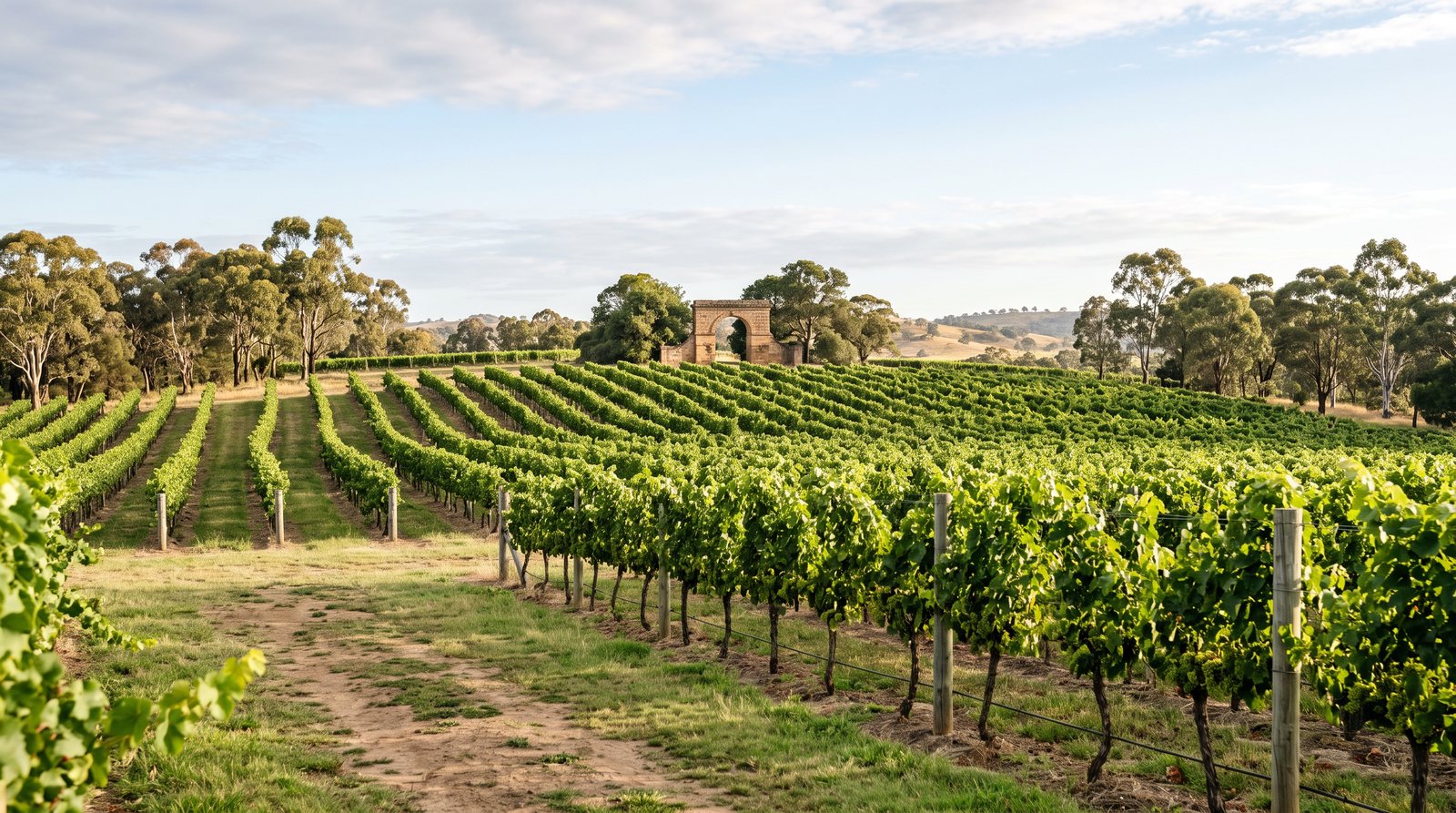
Cowra is situated within the fertile sweep of the Lachlan Valley, where the Lachlan River winds through a landscape defined by agricultural resilience and deep historical layers. Located in the Central West of New South Wales, the town serves as a gateway to a territory that feels both expansive and intimately connected to the earth. The river has long been the lifeblood of the area, sustaining the Wiradjuri people for millennia before supporting a thriving regional hub. Today, the approach to Cowra is marked by the shifting colors of the valley—the gold of canola fields, the deep greens of vineyards, and the rugged, sun-bleached outcrops on the horizon. It is a place where the physical environment holds the memory of its past, offering an invitation to look beyond the surface of the modern township.
The Cowra Japanese Garden and Cultural Centre is a five-hectare sanctuary representing the largest Japanese strolling garden in the Southern Hemisphere. Designed by Ken Nakajima, the garden is a masterclass in shakkei, or "borrowed scenery," integrating the distant hills of the Lachlan Valley into its carefully composed vistas. Every element is deliberate: the placement of granite boulders, the winding paths encouraging a meditative pace, and the precise arrangement of water features symbolizing the journey of life. The garden honors the historical link between Cowra and Japan, serving as a living monument to peace and reconciliation. As visitors move through the landscape, the transition from manicured lawns to rugged stone outcrops mirrors the broader Australian landscape, creating a harmonious dialogue between two distinct aesthetic traditions.
The origins of this international friendship are rooted in a dark chapter of the twentieth century. During World War II, Cowra was the site of a major Prisoner of War camp, which, in August 1944, became the setting for the Cowra Breakout—one of the largest prison escapes in modern history. Over a thousand Japanese prisoners attempted to flee, resulting in a tragic loss of life that left an indelible mark on the town’s memory. However, the community of Cowra chose a path of remembrance and healing rather than bitterness. The site of the former camp is now a place of reflection, where the foundations of the huts remain as silent witnesses. The Japanese War Cemetery, the only one of its kind in Australia, is maintained with meticulous care, a gesture that laid the groundwork for deep cultural ties.
Beyond its history, Cowra is a cornerstone of the Lachlan Valley’s viticultural identity. The region’s climate, with warm days and cool nights, provides an ideal environment for high-quality grapes, particularly Chardonnay and Shiraz. Cowra has gained a reputation for organic and sustainable farming, with local vignerons prioritizing the health of the soil and ecosystem. The vineyards are often family-owned enterprises where the connection to the land is palpable. A visit to a local cellar door offers more than just a tasting; it provides insight into the patient rhythms of the seasons and the meticulous labor required to transform the valley’s harvest into a refined product. The organic wines of Cowra are celebrated for their purity and expression of terroir, reflecting the unique mineral composition of the Lachlan River’s ancient floodplains.
The seasonal transformation of Cowra reaches its peak in September during the Sakura Matsuri, or Cherry Blossom Festival. This event celebrates the blooming of the cherry trees within the Japanese Garden, a brief but spectacular window when the landscape is draped in shades of pink and white. The festival attracts visitors from across the country for a program of traditional Japanese arts, music, and tea ceremonies that strengthen the town’s cultural bridge. Even outside the festival, the garden remains a place of shifting beauty. The changing light of the Lachlan Valley—from misty winter mornings to long, golden summer afternoons—constantly redefines the textures of stone, water, and foliage. The rhythm of the blossoms serves as a reminder of the ephemeral nature of beauty and the importance of preserving hard-won moments of peace.
Cowra’s town centre reflects the stability of a regional hub, with wide streets and historic architecture providing continuity. The Cowra World Peace Bell, a replica of the one at the United Nations headquarters, was awarded to the town in 1992 for its contribution to international understanding. It remains the only World Peace Bell in Australia, housed in a pavilion that serves as a focal point for civic pride. The town’s heritage buildings, ranging from Victorian storefronts to mid-century civic structures, tell the story of a community that has grown alongside its agricultural industries. There is a lack of pretension in Cowra’s atmosphere; it is a place where the weight of history is carried with quiet dignity, and where the daily routines of farming are interwoven with a sophisticated appreciation for global culture.
The concept of peace in Cowra is a practical, lived experience found in the collaborative efforts to maintain the garden and educational programs at the POW camp site. The Lachlan River serves as a metaphor for this ongoing process—a constant, grounding presence connecting the past to the present. The riverbanks offer space for reflection, where the natural beauty of the Australian bush provides a backdrop for the town’s formal monuments. In Cowra, the landscape itself participates in the act of remembrance, with the wind through the eucalyptus trees and the ripple of the water creating a soundtrack for contemplation. This integration ensures that the lessons of history are not relegated to books but are felt in the very air of the valley.
Ultimately, Cowra stands as a testament to the capacity for communities to transform tragedy into a legacy of hope. The town has looked at its most difficult moments and chosen to build something beautiful in their wake. The Lachlan Valley provides the perfect stage for this drama of reconciliation. As the sun sets over the Japanese Garden, casting long shadows across the stone lanterns and tranquil lakes, the connection between this small Australian town and the wider world feels profound. Cowra is not just a place to visit; it is a place to understand the enduring power of peace, the resilience of the land, and the quiet grace of a community that has found its way forward through the lessons of the past.