Country town
Celestial wonders and iconic rhythms define this heritage town in Country New South Wales
In the quiet expanse of Country New South Wales, the town of Parkes serves as a profound intersection where the monumental scale of deep-space exploration meets the vibrant, rhythmic celebration of cultural history and the enduring legacy of the King.
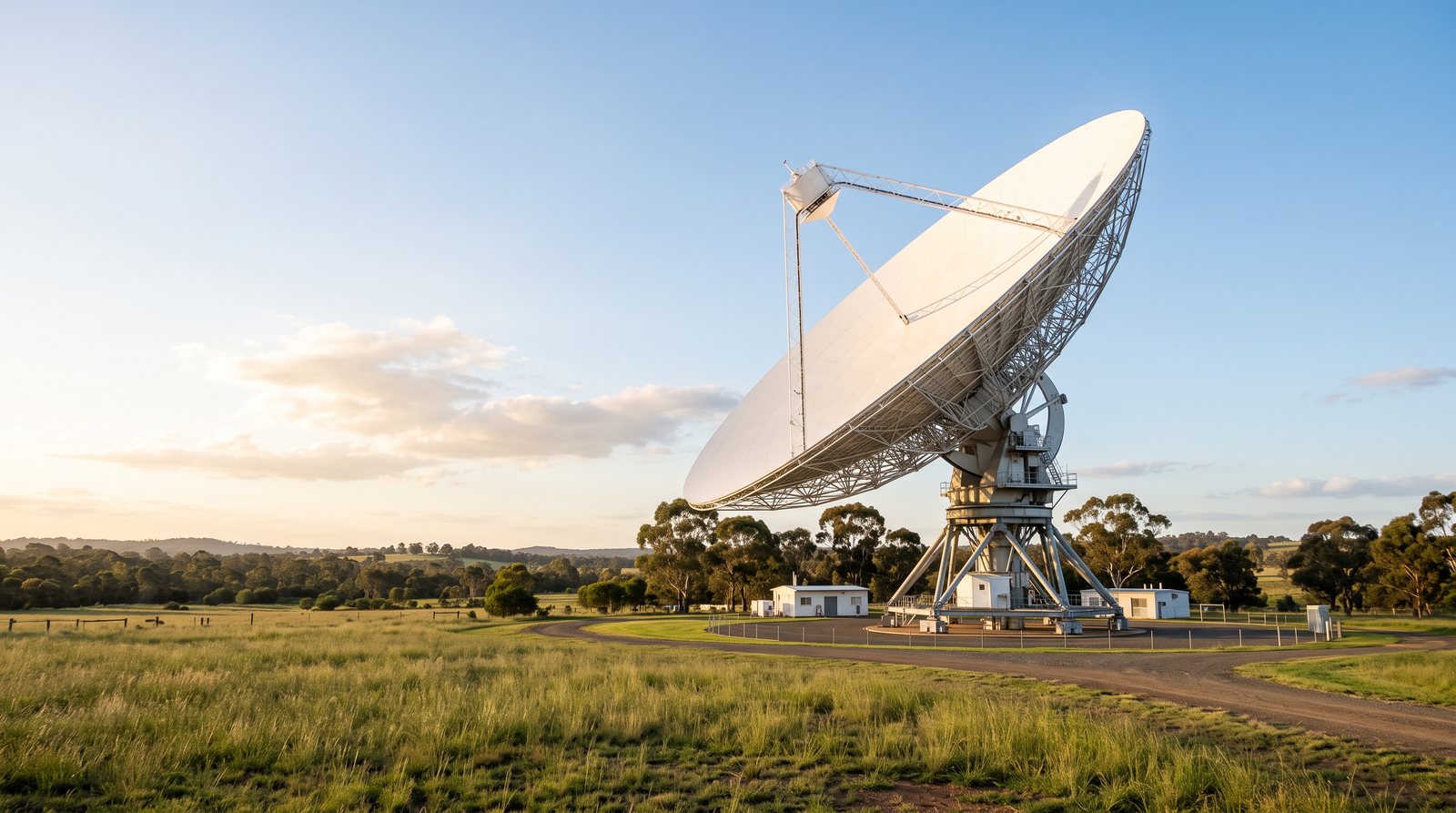
The journey into Country New South Wales is a slow unfolding of time, where the horizon stretches into a promise of red earth. As one approaches Parkes, the landscape introduces a monumental interruption: the Murriyang radio telescope. This 64-metre steel giant, known as "The Dish," stands as a silent sentinel in a paddock of grazing sheep. It is a place where regional farming meets the unfathomable depths of the cosmos, creating an atmosphere of quiet ambition. Parkes has spent decades listening to the universe while hosting one of the most exuberant cultural celebrations in the Southern Hemisphere, defining itself as a bridge between the stars and the stage.
The history of Murriyang is linked to one of humanity’s greatest technological triumphs. In July 1969, this telescope received and broadcast the television signals of the Apollo 11 moon landing to an audience of millions. The precision required to track a lunar module across the void remains a testament to the engineering brilliance housed within this rural setting. The telescope’s role in that historic moment transformed Parkes from an agricultural hub into a global focal point for space science. Even today, walking through the grounds, there is a palpable sense of that legacy—a reminder that a remote corner of the Lachlan Valley once served as the world’s primary link to the first steps taken on another celestial body.
Visitors to the CSIRO Parkes Radio Telescope Discovery Centre engage with space science that is as active today as it was in the sixties. The facility is a working laboratory that continues to contribute to our understanding of pulsars and the fundamental structure of the galaxy. The Discovery Centre translates complex astrophysical data into a narrative of human curiosity. Through world-class exhibits, the town shares its scientific identity, showing how the massive dish remains a vital instrument in the international network of deep-space observation. The sight of the telescope slowly rotating to track a distant star is a choreographed display of technical grace that never fails to inspire a profound sense of wonder in those who visit.
Parkes possesses a second, equally famous rhythm that exists in joyful contrast to the silent observation of the stars. Every January, the town undergoes a radical transformation as thousands of visitors descend for the annual Parkes Elvis Festival. What began as a modest birthday tribute has evolved into a multi-day cultural phenomenon, filling the heritage streets with sequins, jumpsuits, and the unmistakable sound of "Blue Suede Shoes." This festival is a masterpiece of community spirit, where residents and business owners embrace the spectacle with a sincerity that is uniquely Australian. It is a celebration of music and memory that turns the quiet regional centre into a vibrant stage, proving that heritage can be as much about a song as history.
The coexistence of these two identities—the rigorous scientific inquiry of the telescope and the flamboyant celebration of the Elvis Festival—defines the character of Parkes. It is a town that understands the value of both the profound and the playful. While the telescope peers into the dark reaches of the universe, the festival shines a spotlight on the enduring power of human connection. This harmony is reflected in the way the town manages its heritage; the Victorian buildings of the main street provide a dignified backdrop for both regional commerce and the whimsical parade of Elvis tribute artists. It is a place where a scientist and a fan of rock and roll might share a table, both drawn by a desire to witness something extraordinary.
Beyond the headlines of space and song, Parkes offers a deeper connection to the landscape of Country New South Wales. Surrounded by the fertile plains of the Lachlan Valley, the town exists where the seasons dictate the pace of life and the light has a clarity that photographers admire. Local heritage trails lead visitors through a story of gold rushes and pioneer resilience, which once made Parkes a vital junction for the interior of the state. There is a quiet dignity in the way the town preserves its past, from the meticulously maintained Henry Parkes Centre to the small details of ironwork on a suburban veranda. It is a reminder that even in a place that looks to the stars, the roots are firmly planted.
A visit to Parkes is an exercise in scale. At the telescope, one feels diminutive against the verticality of the dish and the vastness of the sky. In the town during the festival, one is swept up in the energy of a crowd that refuses to take itself too seriously. This shift in perspective makes the destination compelling. It encourages travel that is both outward-looking and inward-reflecting. Whether standing in the shadow of the Murriyang telescope or watching a sea of pompadours march by, you are participating in a story about the reach of human imagination and the durability of our icons.
The legacy of observation in Parkes is not just about the data collected by the CSIRO or the festival attendance. It is about the act of paying attention. The telescope pays attention to the signals that define our physical universe, while the festival pays attention to the cultural signals that define our social identity. Both require devotion—a commitment to keeping the equipment running and the memory alive. This dedication gives Parkes its gravity. It is a regional hub that has refused to be overlooked, carving out a space for itself in both the scientific record and the popular imagination.
Ultimately, Parkes stands as a testament to the idea that the most interesting places refuse to be categorized by a single definition. It is a town of celestial wonders and iconic rhythms, where the 64-metre dish of Murriyang and the legacy of Elvis Presley share the same horizon. For the traveler, it offers a rare opportunity to engage with the monumental and the intimate. As the sun sets over the sheep paddocks and the telescope begins its nightly vigil, the town remains a beacon of curiosity and joy. Parkes is a place where the distance to the stars feels shorter, and the sound of a familiar melody feels closer, reminding us that we are all looking for a signal.