Historic site
A gold rush relic preserved within the 1870s Australian landscape
Hill End remains a rare, physical archive of the 1870s Australian gold rush, where weathered timber and brickwork stand as a testament to a vanished boom. This historic village preserves the quiet rhythm of a town once home to the world’s largest gold specimen.
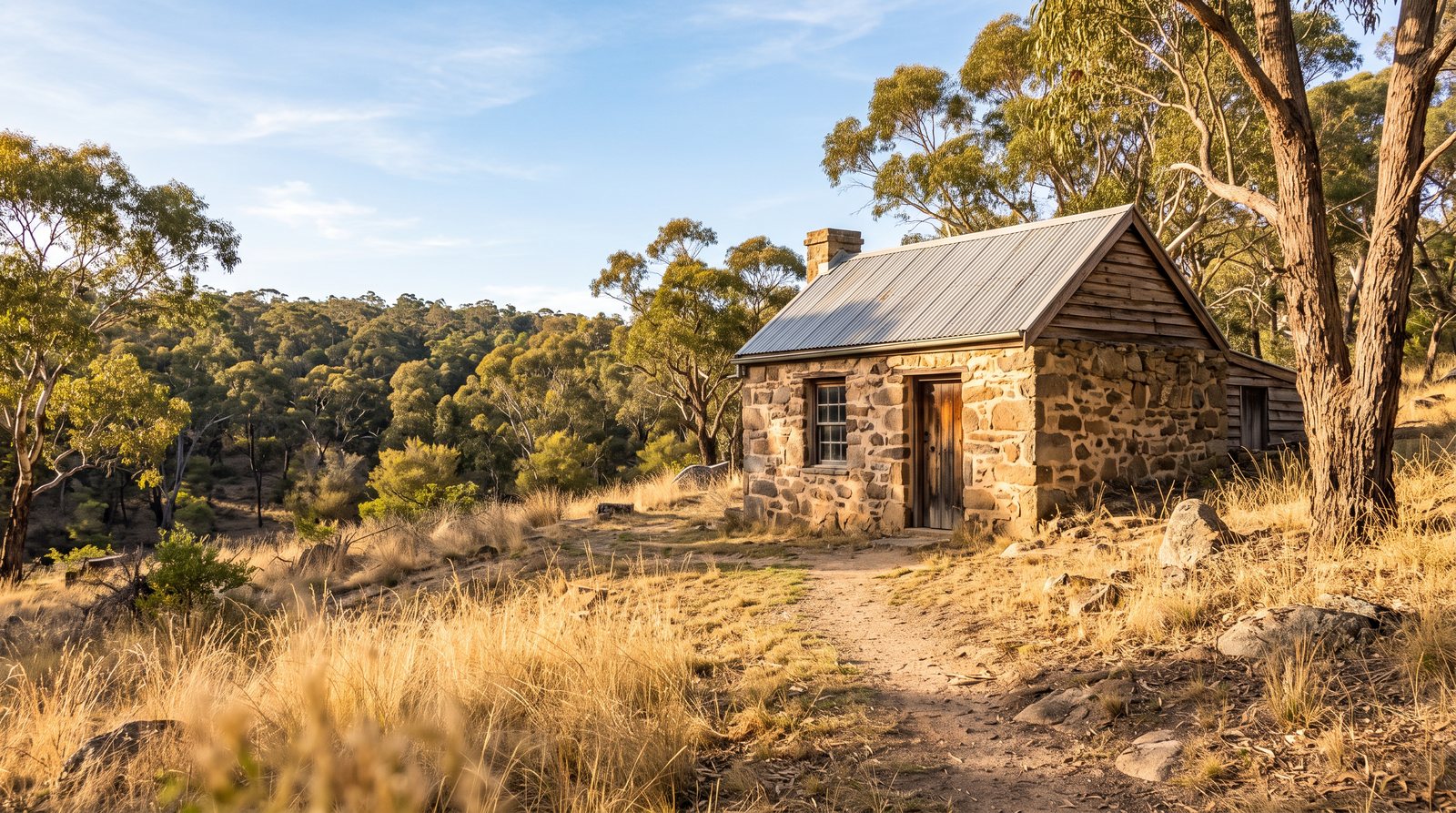
The approach to Hill End Historic Site requires a deliberate departure from the accelerated pace of the modern New South Wales interior. As the road winds through the high country beyond Bathurst, the landscape sheds the polished utility of contemporary agriculture for a more rugged, skeletal beauty. Here, the air carries a distinct clarity, and the light possesses a sharp quality that emphasizes the grain of weathered timber and the grit of the red earth. Arriving in the village feels like crossing a temporal threshold, where the concerns of the twenty-first century are replaced by the silent presence of the 1870s. It is a place where time is measured not by progress, but by the patient weathering of surfaces and the slow reclamation of industrial scars by the surrounding bushland.
The physical village stands as a rare archive of nineteenth-century Australian life, preserved with a restraint that avoids the artifice of a typical theme park. The streetscape is a study in texture, characterized by the silvered timber of original storefronts, the resilience of local brickwork, and the rhythmic geometry of corrugated iron. Buildings like the Royal Hotel and the General Store are not merely historical markers; they are functional survivors that continue to define the town’s quiet center. Walking along the unsealed edges of the main thoroughfare, one notices how the architecture sits integrated within the landscape. There is a sense of "arrested decay" here—a philosophy that stabilizes structures while allowing the natural marks of age to remain visible, ensuring history is felt through the physical reality of its materials.
The historical weight of Hill End is rooted in the feverish energy of the 1872 gold boom, a period of rapid expansion that transformed a remote outpost into a thriving center. At its peak, the town was a cacophony of industrial activity, home to dozens of hotels and businesses catering to thousands drawn by the promise of riches. The most enduring symbol of this era remains the Holtermann Nugget, a massive specimen of reef gold discovered in the Star of Hope mine, which remains the largest ever recorded. This find epitomized the extraordinary potential of the Hill End quartz reefs and fueled a speculative frenzy that defined the town’s character. Today, the memory of that wealth persists in the scale of the remaining buildings and the vast network of mine shafts that still honeycomb the earth.
Beyond the village streets, the landscape bears the marks of this industrial past, creating a terrain that is both beautiful and scarred. The earth around Hill End is characterized by deep erosion gullies, towering mullock heaps, and the stark remains of mining machinery left to the elements. This is not a pristine wilderness, but a cultural landscape where the environmental impact of the gold rush has become an integral part of the site’s aesthetic identity. The red and ochre tones of the exposed soil provide a dramatic contrast to the muted greens of the eucalyptus trees, creating a uniquely Australian visual palette. In the late afternoon, the shadows cast by these man-made landforms lengthen across the valley, emphasizing the scale of the displacement that occurred during the mining era and the way nature is now softening those sharp edges.
This intersection of history and landscape has long made Hill End a significant site for Australian art, serving as a muse for generations of painters. In the mid-twentieth century, artists such as Russell Drysdale and Donald Friend were drawn to the town’s stark beauty, developing a visual language that defined the "Hill End style." Their works captured the elongated shadows and weathered facades, elevating the town from a historical relic to a symbol of the Australian interior’s enduring spirit. Even today, the town maintains a vibrant connection to the arts, with residencies ensuring that the creative interpretation of Hill End continues to evolve. The light that once inspired the modernists still falls across the same timber walls, inviting new observers to find their own meaning in the town’s layered history and the resilient character of its structures.
The atmosphere of Hill End today is defined by a pervasive quietude, a silence that stands in contrast to the thunderous noise of the boom years. Without the intrusion of heavy traffic, the town allows for a different sensory experience, where the sound of the wind through the pines and the call of a bird become the primary acoustic markers. This stillness encourages a slower pace of exploration, inviting visitors to notice smaller details: the way a gate hinges, the pattern of lichen on a stone wall, or the specific scent of woodsmoke in the winter air. It is a place that rewards patience, offering an opportunity to step away from contemporary connectivity and engage with a landscape that operates on a much longer timescale. The quiet is not an absence of life, but a presence of history.
The ongoing preservation of Hill End is managed by the National Parks and Wildlife Service with a focus on maintaining the site’s integrity as a "living" historic village. Unlike a museum where objects are static, Hill End is a place where people still live and work, requiring a balance between heritage conservation and modern functionality. The work involves the constant maintenance of aging structures and the protection of fragile archaeological sites. This effort is guided by a philosophy that values the "spirit of place"—an intangible quality arising from the combination of physical remnants and the stories associated with them. By protecting the town’s weathered appearance and resisting the urge to over-restore, the conservators ensure that Hill End remains an evocative representation of its past, allowing visitors to encounter the 1870s in a way that feels direct.
Ultimately, Hill End Historic Site serves as a meditation on the transitory nature of human ambition and the enduring character of the Australian landscape. The gold that once defined the town’s existence is gone, yet the village remains as a testament to the labor of those who sought their fortunes here. It is a place that invites reflection on what we value and what we leave behind, offering a perspective that is both humbling and enriching. As the shadows lengthen over the Royal Hotel and the first stars appear in the clear high-country sky, the town’s "wistful" quality becomes most apparent—a sense of longing for a past that is gone, combined with an appreciation for the beauty that remains. Hill End is not just a destination; it is a vital piece of cultural memory, a relic preserved within the landscape that continues to offer insights into the relationship between people and the earth.