Heritage city
Australia’s oldest inland colonial settlement where heritage architecture meets the thrill of motor racing
Bathurst blends grand Victorian heritage with the high-octane legacy of Mount Panorama. Beyond the historic sandstone and racing curves, the city reveals a refined landscape of cool-climate vineyards, museums, and the quiet flow of the Macquarie River.
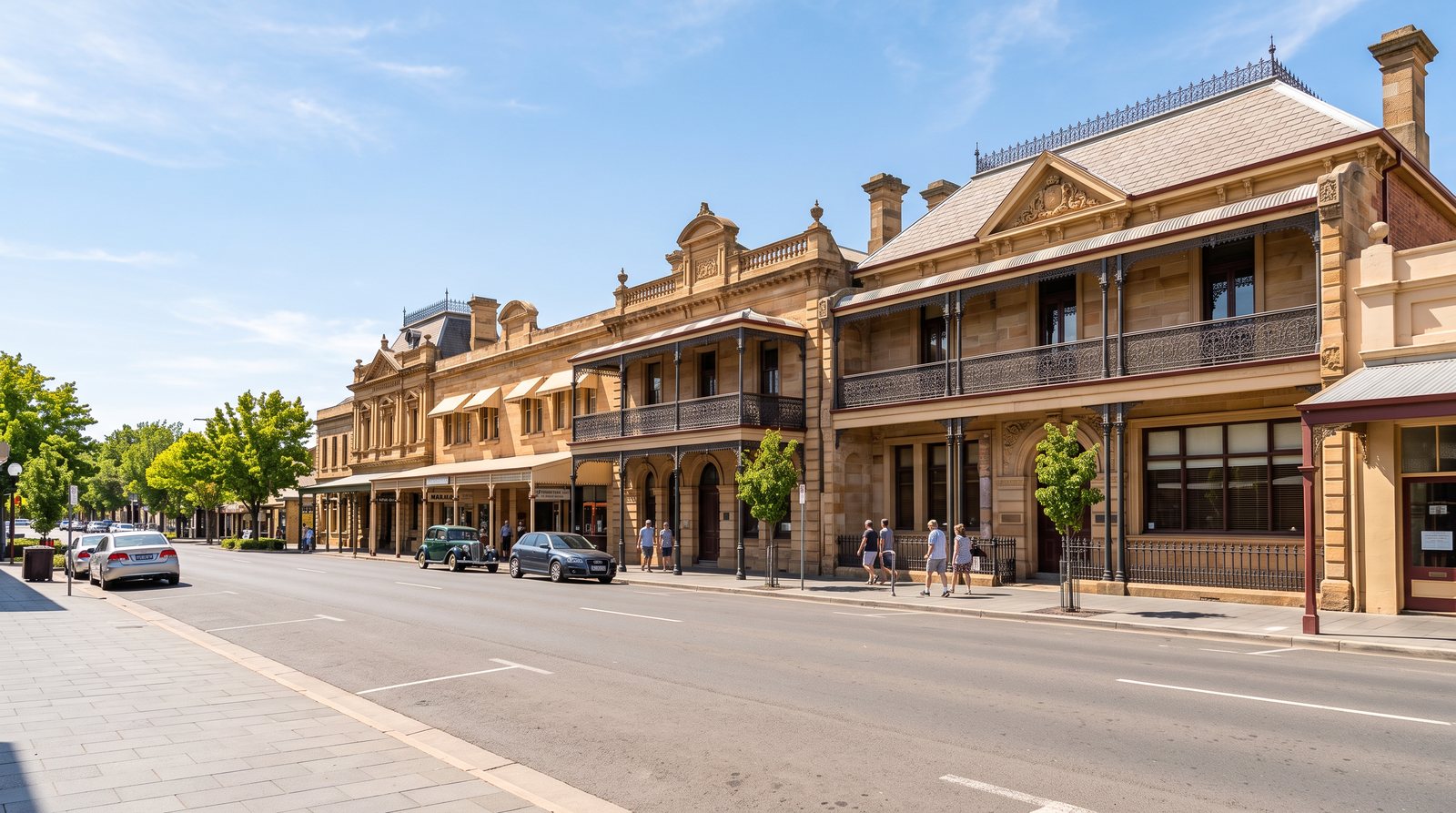
Bathurst occupies a singular position in the Australian consciousness, standing as the nation’s oldest inland colonial settlement and a gateway to the vast interior. Established in 1815 following the crossing of the Blue Mountains, the city represents a definitive break from the coastal orientation of early European life. As one descends from the rugged sandstone heights of the Great Dividing Range, the landscape opens into the rolling hills and expansive skies of the Central Tablelands. Here, the Macquarie River winds through the valley, providing the vital lifeblood that allowed the early township to flourish. The transition from forested ridges to fertile plains is marked by a shift in light and atmosphere—a clarity of air that signals the beginning of the true country. Bathurst is not merely a destination but a threshold, where the ambition of a growing colony first met the daunting scale of the Australian bush, creating an identity rooted in its geographical and historical context.
The civic heart of Bathurst is defined by an architectural elegance that speaks to the prosperity of the late nineteenth century. At the center stands the Bathurst Courthouse, a magnificent example of Victorian Neoclassical design that dominates the skyline with its grand sandstone facade and iconic octagonal clock tower. Completed in 1880, the building serves as a testament to the civic pride of a city once considered a potential capital for the Australian federation. Directly adjacent lies Machattie Park, a meticulously landscaped Victorian garden occupying the site of the original Bathurst Gaol. The park’s transformation into a sanctuary of botanical beauty is emblematic of the city’s evolution. Within its gates, visitors find a rich collection of exotic trees and ornate fountains, all framed by the dramatic seasonal shifts of the Tablelands. In autumn, the park is a riot of gold and crimson, while spring blossoms provide a soft counterpoint to the solid presence of heritage buildings.
While the city’s colonial bones provide historical weight, its modern identity is inextricably linked to the high-speed drama of Mount Panorama. Known to the Wiradjuri people as Wahluu, the mountain is a site of deep cultural significance that now hosts one of the world’s most challenging motor racing circuits. Unlike purpose-built tracks, Mount Panorama is a public road for most of the year, allowing ordinary drivers to navigate the steep climbs and terrifying descents of the 6.2-kilometer loop. The circuit’s topography is legendary, rising 174 meters from the lowest to the highest point, with the narrow section across the top offering breathtaking views of the Bathurst basin. During major racing events, the city is transformed by the roar of engines, yet in the quiet interludes, the mountain returns to its role as a scenic lookout and place of reflection. This duality—the intersection of ancient land and international sporting spectacle—is central to the Bathurst experience.
Beyond the track, Bathurst reveals a sophisticated cultural landscape that invites exploration of both natural history and contemporary expression. The Australian Fossil and Mineral Museum, housed in a beautifully restored nineteenth-century school, contains the internationally significant Somerville Collection. Among its treasures is the only complete Tyrannosaurus Rex skeleton in Australia, a reminder of the "deep time" that predates the oldest human histories of the region. This focus on the prehistoric is complemented by the Bathurst Regional Art Gallery, which serves as a vibrant hub for the local creative community. The gallery’s collection reflects the unique light and landscape of the Central Tablelands, offering a visual dialogue between the city’s past and its evolving future. In these spaces, visitors look beyond the heritage facade to discover a place where scientific curiosity and artistic ambition are woven into the fabric of daily life, providing an intellectual depth.
The agricultural heritage of the Central Tablelands has undergone a modern refinement, turning Bathurst into a premier destination for cool-climate viticulture and gourmet dining. The region’s high altitude and rich volcanic soils provide ideal conditions for producing elegant Chardonnays, crisp Rieslings, and nuanced Pinot Noirs. Local cellar doors offer a personal connection to the land, where winemakers share stories of each vintage against a backdrop of rolling vineyards and distant peaks. This commitment to quality extends to the city’s dining scene, where heritage pubs and contemporary bistros emphasize a farm-to-table philosophy. Local produce—from succulent lamb and beef to orchard fruits and artisanal cheeses—is celebrated in seasonal menus that reflect the rhythms of the land. The Bathurst Farmers’ Market provides a sensory showcase of the region’s bounty, allowing visitors to engage directly with the growers and producers who sustain the community.
The character of life in Bathurst is defined by the distinct passage of the four seasons, a rarity in many parts of the Australian continent. Winter in the Central Tablelands brings a crisp, bracing cold, with frost-covered mornings and the occasional dusting of snow on the higher peaks, encouraging a cozy culture of fireplaces and hearty meals. As the year turns, spring arrives with a vibrant explosion of color as the city’s gardens and parks come into bloom and the surrounding paddocks turn a brilliant green. Summer brings a dry, radiant heat that ripens the grapes in the vineyards and draws people to the shade of the river oaks. However, it is perhaps autumn that is the most spectacular, as the city’s extensive plantings of European trees turn every street into a corridor of gold and amber. This seasonal cycle dictates the pace of local life, from the timing of festivals and racing events to the availability of regional produce, creating a sense of time that is measured by the changing light.
In the final estimation, Bathurst offers a wistful reflection on the Australian experience, a place where the diverse threads of history, culture, and nature are woven into a rich and enduring tapestry. It is a city of layers, where the ancient significance of Wahluu and the Wambool sits alongside the ambitious architecture of the colonial era and the high-tech intensity of modern motor racing. To walk its streets is to move through time, encountering the marks of explorers, gold-seekers, pioneers, and racers who have all left their imprint on the red earth of the Tablelands. The wistfulness comes from the recognition of what has been lost and what has been gained in the process of settlement—the transition from a wild frontier to a refined regional center. As the sun sets behind Mount Panorama, casting long shadows across the sandstone of the courthouse and the golden leaves of Machattie Park, one is struck by the enduring appeal of the inland. Bathurst remains a testament to the human desire to build something lasting in a vast landscape, where the heart of the country beats with a steady pulse.