National park
Ancient pines and wild rivers in the largest wilderness of New South Wales
Wollemi National Park protects the largest declared wilderness in New South Wales, a World Heritage-listed expanse of prehistoric pines, bioluminescent tunnels, and dramatic pagoda rock formations carved by ancient river systems.
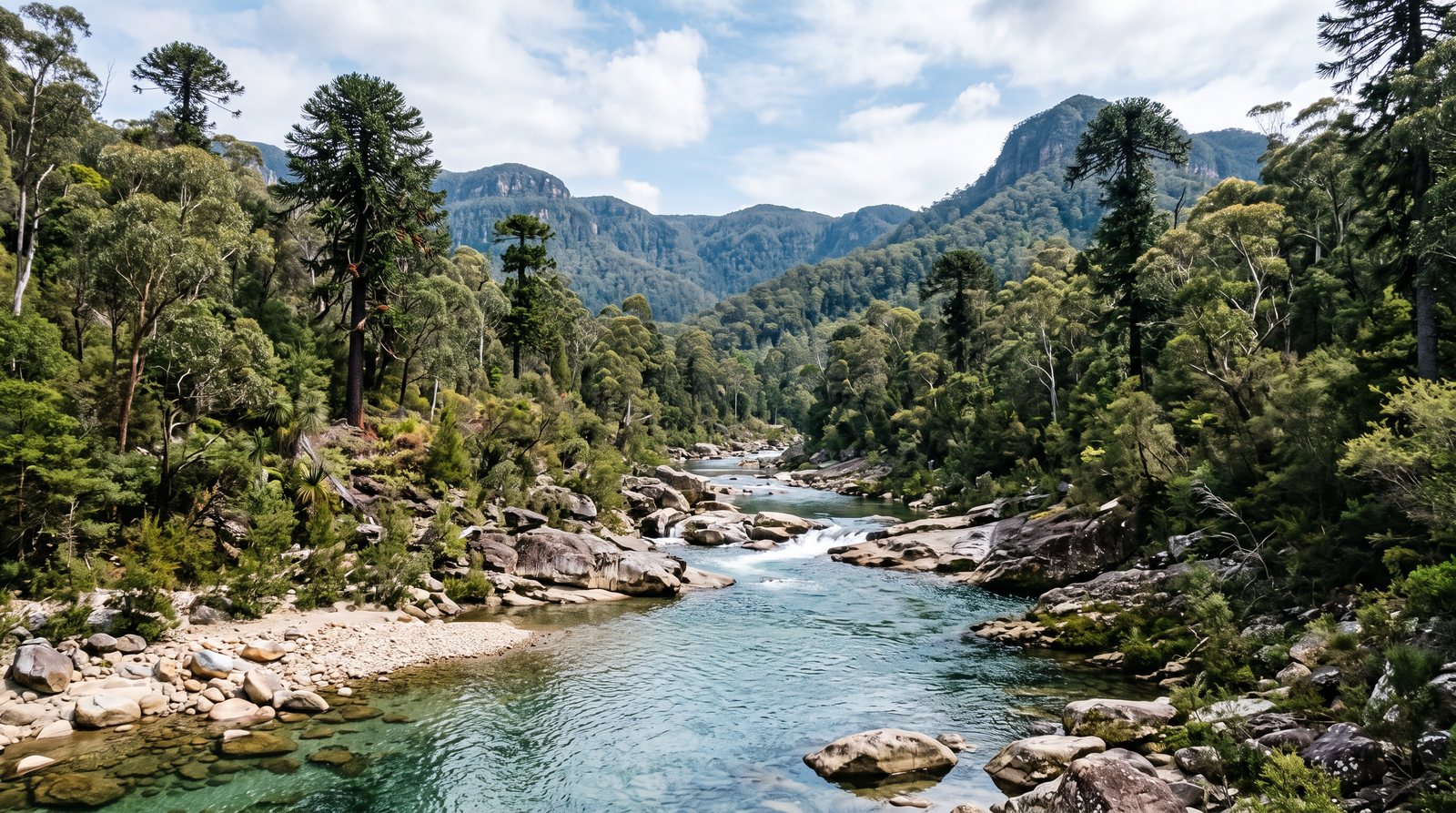
Wollemi National Park stands as the most significant wilderness area in New South Wales, encompassing over 500,000 hectares of rugged sandstone plateau and untamed river systems. Located within the Greater Blue Mountains World Heritage Area, it represents a landscape largely unchanged for millions of years. The sheer scale of the park makes it a sanctuary for biodiversity, offering a level of isolation increasingly rare in the modern world. Unlike the more accessible parts of the Blue Mountains, Wollemi requires a different kind of engagement—one defined by patience and a willingness to step into a territory where nature dictates the terms of travel. It is a place where geological history is laid bare in the vertical faces of its cliffs and the complexity of its canyons.
Perhaps the most famous resident of this wilderness is the Wollemi Pine, a tree thought to be extinct for millions of years until its accidental discovery in 1994. Described as the botanical equivalent of a living dinosaur, the species dates back to the Jurassic age. Tucked away in a remote, deep canyon to protect them from fire and human interference, these ancient trees are a living link to a prehistoric past. Their survival in such an isolated microclimate highlights the park's role as a refugium, a place where life persists despite dramatic changes occurring on the planet's surface. The exact location of the original grove remains a closely guarded secret to ensure the continued survival of one of the world's rarest and oldest plants.
The physical architecture of Wollemi is defined by dramatic sandstone formations, most notably the "pagoda" rocks that rise like tiered temples. These structures result from millions of years of weathering, where ironstone layers resisted erosion more effectively than the surrounding sandstone, creating a unique, stepped appearance. Walking among these formations feels like navigating a natural city of stone, where every turn reveals a new perspective on the landscape's slow transformation. The pagodas are particularly striking at Ganguddy-Dunns Swamp, where they frame the water in a way that suggests intentional design. This area, created by a weir on the Cudgegong River, provides a rare point of stillness in a park otherwise defined by the movement of wild water and the verticality of its cliffs.
Beneath the surface of the plateau, the park hides a network of canyons and tunnels offering a different sensory experience. The Glow Worm Tunnel, a remnant of the historic Newnes railway line, shows how human infrastructure can be reclaimed by nature. Once a passage for trains hauling oil shale, the tunnel is now home to thousands of glow worms. In the absolute darkness of the tunnel's center, the bioluminescent larvae create a subterranean galaxy, their soft blue light reflecting off damp sandstone walls. This transition from an industrial past to a biological sanctuary is a recurring theme in Wollemi, where the scars of early resource extraction are slowly being healed by the persistent growth of the forest and the return of native inhabitants.
Water is the lifeblood of the Wollemi wilderness, and the Colo River is its most formidable artery. As the longest wild river in New South Wales, the Colo has carved a spectacular gorge hundreds of meters deep. The river remains one of the few in the state not significantly impacted by dams or diversions, allowing it to maintain its natural flow and ecological integrity. For those who venture into the Colo gorge, the experience is one of profound immersion. The high sandstone walls create a sense of enclosure, while the clear water and sandy banks provide a pathway through the heart of the wilderness. The river system supports diverse aquatic life and serves as a vital corridor for terrestrial animals moving through the rugged terrain.
The cultural heritage of Wollemi is as deep as its canyons, holding significant meaning for the Wiradjuri, Dharug, Wanaruah, and Darkinjung people. The park contains hundreds of Aboriginal sites, including rock art, occupation shelters, and grinding grooves, speaking to a continuous connection with the landscape spanning thousands of years. These sites are not merely relics of the past but part of a living cultural landscape managed in collaboration with Traditional Owners. Their presence throughout the park serves as a reminder that what we now define as wilderness has long been a home and a place of spiritual importance. The protection of these cultural assets is as central to the park's mission as the preservation of its ecological and geological features.
Navigating Wollemi is a challenge demanding respect for the environment and an understanding of one's limitations. The terrain is notoriously difficult, with thick scrub, steep descents, and few marked trails beyond the park's periphery. It is a place where modern navigation tools are essential, yet the sheer complexity of the landscape can still disorient experienced hikers. This difficulty is part of the park's value; it preserves a sense of genuine adventure and the possibility of discovery. Visitors are encouraged to prepare thoroughly, carrying adequate supplies and informing others of their plans. The reward for this preparation is an encounter with a landscape that feels truly vast, where the sounds of the city are replaced by the rush of wind through the pines.
As we look to the future, the preservation of Wollemi National Park is more critical than ever. The park faces ongoing threats from climate change, particularly the increasing frequency and intensity of bushfires, which pose a significant risk to its ancient forests. The 2019-2020 fire season was a stark reminder of this vulnerability, as firefighters worked to protect the Wollemi Pine groves from advancing flames. Ensuring the resilience of this wilderness requires a commitment to long-term conservation strategies and a recognition of the park's global significance. Wollemi is not just a local asset but a vital part of the world's natural heritage, a place where the prehistoric past is still present, and where wild rivers continue to flow through stone and shadow.