Botanic garden
A cool-climate sanctuary perched high above the Blue Mountains wilderness
Situated one thousand metres above sea level, the Blue Mountains Botanic Garden Mount Tomah stands as the highest cool-climate sanctuary in the Southern Hemisphere, offering a profound horticultural journey through the UNESCO World Heritage wilderness.
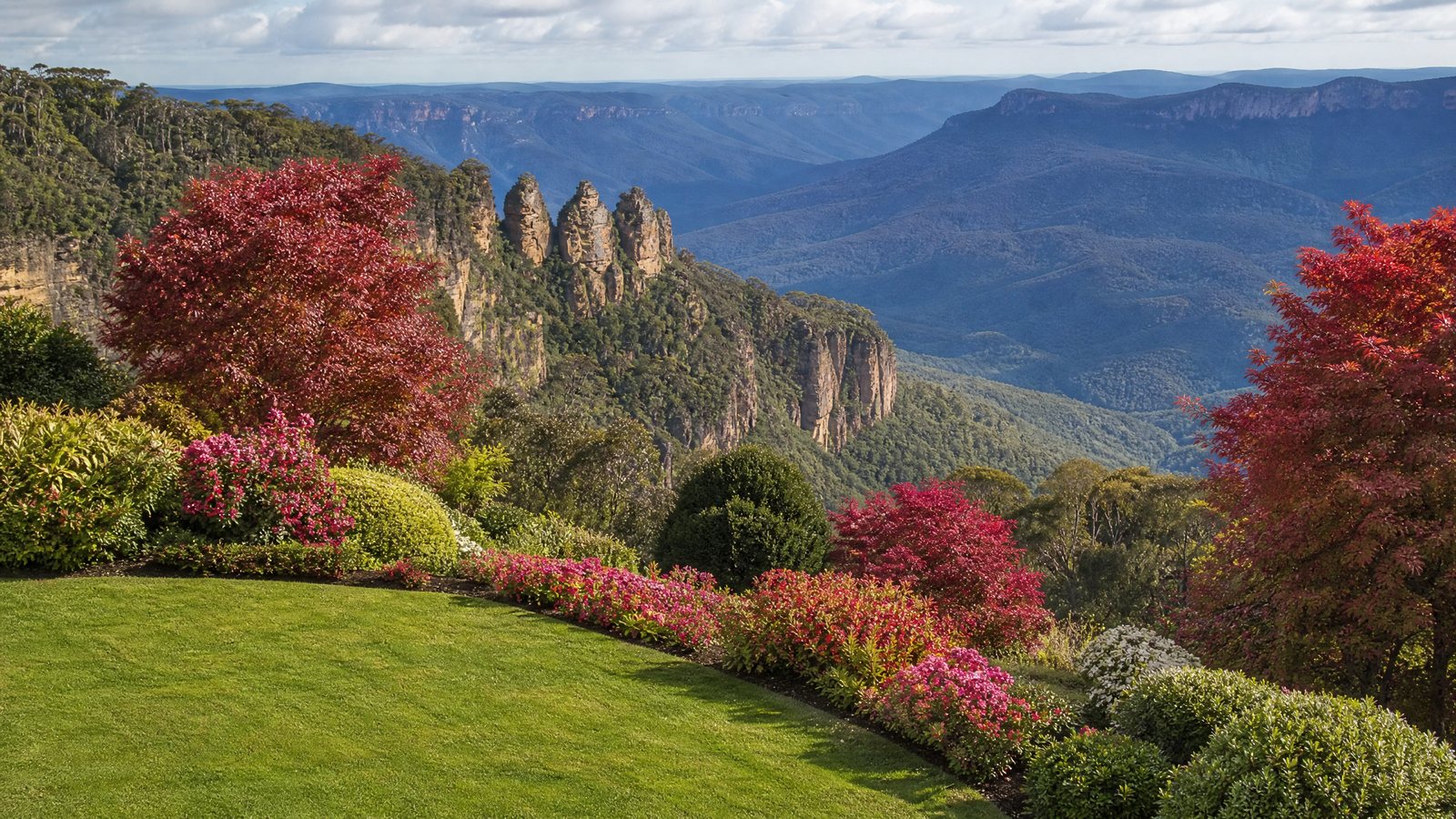
The ascent to Mount Tomah is a transition of both altitude and atmosphere. As the road climbs toward the one-thousand-metre mark, the humid air of the New South Wales coast gives way to a crisp, high-altitude clarity that defines the Blue Mountains Botanic Garden. Perched on a basalt cap that rises sharply above the surrounding sandstone plateau, the garden occupies a unique ecological niche. It is the only botanic garden in the world situated within a UNESCO World Heritage-listed area, serving as a cultivated gateway to the Greater Blue Mountains wilderness. The basalt soil, a legacy of ancient volcanic activity, provides a nutrient-rich foundation that allows for the cultivation of a vast array of cool-climate plants.
The history of the site is deeply layered, beginning with its original inhabitants. The name "Tomah" is understood to be an Indigenous word meaning "tree fern," a reference to the prehistoric vegetation that still thrives in the garden’s sheltered gullies. European awareness of the area began in 1804 when the naturalist George Caley reached what he named Fern Tree Hill. Caley’s records were among the first to document the unique flora of the basalt cap. By 1830, the land was granted to Susannah Bowen, and the Bowen family maintained the property for generations. Today, the site is managed by the Botanic Gardens of Sydney, continuing a legacy of horticultural research and public education.
Horticulturally, the garden is a showcase of global cool-climate diversity, spread across twenty-eight hectares of cultivated land. The collections are organized with a geographic precision that allows visitors to travel through different mountain regions of the world. The Heath Garden features a vibrant array of proteas and other African plants, their architectural forms thriving in the well-drained volcanic soil. Nearby, the rhododendron and camellia collections offer a riot of colour during the spring months, benefiting from the garden’s reliable rainfall and cool temperatures. The garden’s design emphasizes the verticality of the site, with paths that wind down from formal lawns into dense pockets of alpine rainforest, where the temperature drops noticeably.
Beyond its aesthetic appeal, the Blue Mountains Botanic Garden plays a critical role in global plant conservation. As a member of the Botanic Gardens of Sydney, it serves as a high-altitude laboratory for studying the impacts of climate change on sensitive species. One of the garden’s most significant residents is the Wollemi Pine, a "living fossil" that was thought to be extinct until its discovery in a remote canyon nearby in 1994. The garden maintains a curated population of these rare trees, ensuring their survival outside their secret, fire-prone natural habitat. This conservation work extends to the surrounding 244 hectares of wilderness, which the garden actively manages as part of the UNESCO World Heritage Area.
The passage of time at Mount Tomah is marked by dramatic seasonal shifts, each bringing a new character to the landscape. In late winter and early spring, the garden is transformed by a massive bulb display, featuring over 50,000 daffodils that carpet the slopes in yellow and white. This annual event is one of the largest of its kind in the Southern Hemisphere, drawing visitors who witness the first signs of life after the mountain winter. Autumn is perhaps the garden’s most spectacular season, as the deciduous trees from the Northern Hemisphere—maples, oaks, and beeches—turn brilliant shades of orange, red, and gold. This seasonal rhythm provides a sensory experience that is rare in the predominantly evergreen Australian landscape.
The integration of architecture and landscape design at Mount Tomah is a study in restraint and respect for the natural environment. The Visitor Centre and the various pavilions are designed to blend into the hillside, using materials that reflect the muted tones of the basalt and sandstone. The rainforest boardwalk is a particular highlight, allowing visitors to walk through the mid-canopy of the alpine rainforest without disturbing the delicate forest floor. This elevated path provides a unique perspective on the tree ferns and epiphytes that cling to the damp trunks of the forest giants. The garden’s layout encourages exploration, with a network of trails that range from gentle strolls across the lawns to hikes down into the wilderness.
The relationship between the cultivated garden and the surrounding wilderness is one of the most compelling aspects of Mount Tomah. From almost any point in the garden, the eye is drawn outward to the vast, undulating peaks of the Greater Blue Mountains. These panoramic views provide a sense of scale that is often missing from smaller, urban botanic gardens. The blue haze that gives the mountains their name—a result of light scattering through eucalyptus oil droplets in the air—creates a sense of depth and mystery that stretches to the horizon. The 244 hectares of wilderness that surround the cultivated areas are an integral part of the garden’s identity, providing a home for diverse wildlife.
Ultimately, the Blue Mountains Botanic Garden Mount Tomah is a place of quiet observation and deep connection. It is a "living environmental instrument" that records the health of the mountain ecosystem while offering a space for human reflection. In an increasingly fast-paced world, the garden provides a necessary pause, inviting visitors to slow down and notice the details—the texture of a leaf, the scent of the damp earth, the way the light changes as the sun sets. The educational programs offered at the site aim to foster this sense of stewardship, teaching children and adults alike about the importance of biodiversity and the beauty of the natural world through guided tours and simple encounters.
As the highest botanic garden in the Southern Hemisphere, Mount Tomah stands as a sentinel on the edge of the wilderness. Its success is a testament to the vision of the naturalists, gardeners, and scientists who have cared for this land for over two centuries. By balancing the needs of a world-class plant collection with the preservation of a World Heritage wilderness, the garden offers a model for how we might live more harmoniously with the natural world. The basalt cap of Mount Tomah, once a site of volcanic upheaval, is now a place of peace and growth, a cool-climate sanctuary that continues to inspire all who make the journey to its heights.