Mountain village
The high-altitude heart of the Blue Mountains where wild valleys meet refined village charm
Perched at the highest point of the Blue Mountains, Blackheath blends dramatic vistas of the Grose Valley with a sophisticated village scene of antique galleries and artisanal dining.
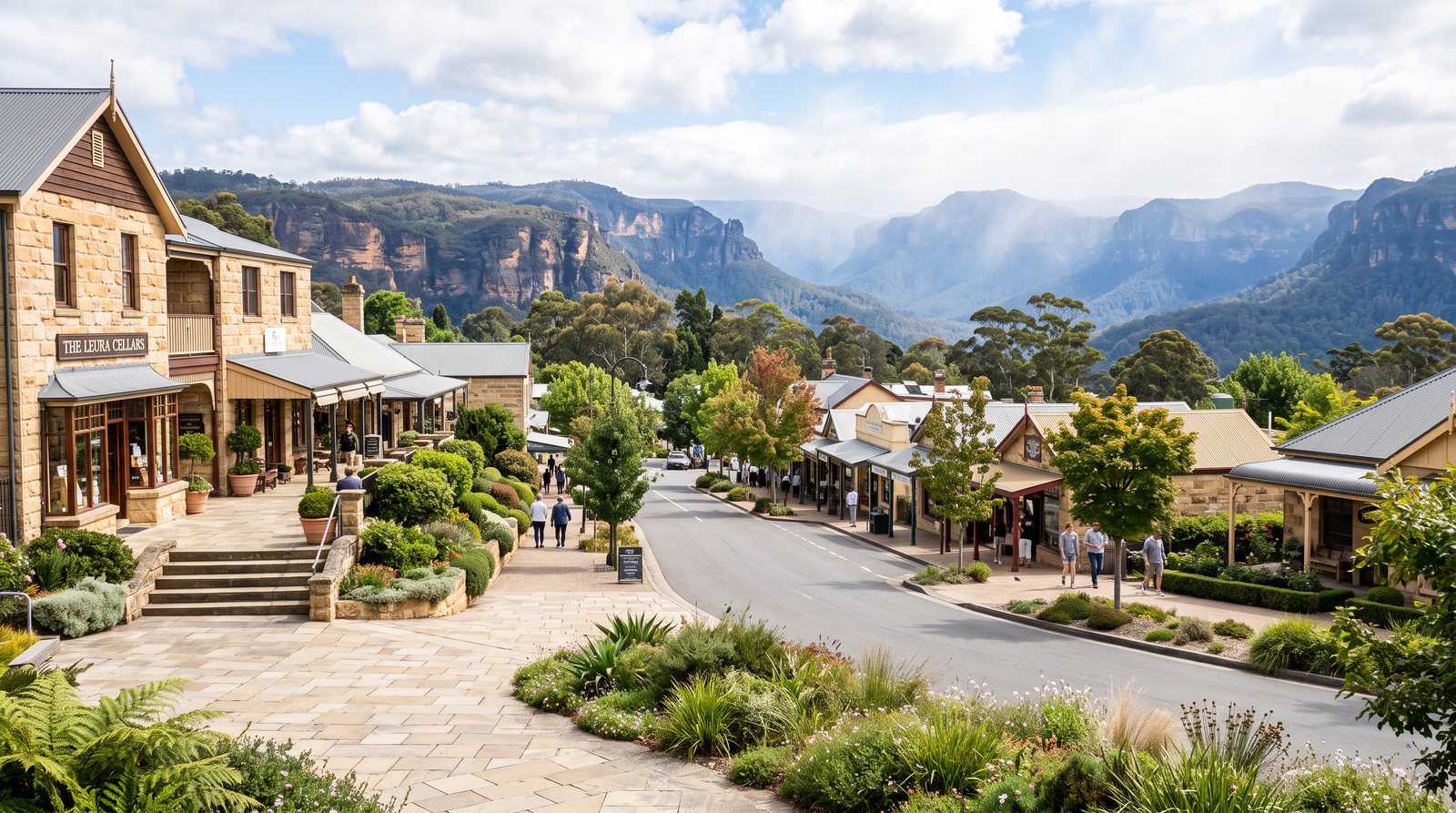
Blackheath occupies a singular position within the Blue Mountains, situated at the highest elevation of the ridge where the air carries a distinct, sharp clarity. Unlike its busier neighbors, the village possesses a quiet authority derived from its proximity to the true wilderness of the Grose Valley. To arrive here is to leave behind the commercial rhythms of the lower peaks and enter a space where the landscape dictates the pace of daily life. The town is built along the crest of the range, a thin strip of human settlement bordered by vast, plunging escarpments that drop into ancient forests. This geography creates a unique atmosphere where the domestic and the wild exist in constant, visible tension. The wide, tree-lined streets and established gardens offer a sense of permanence, yet the horizon is always defined by the jagged sandstone silhouettes that mark the edge of the civilized world.
The most immediate expression of this scale is found at Govetts Leap, where the land simply ceases to be. From the lookout, the Grose Valley opens up in a staggering display of geological time, a cathedral of sandstone walls that change color with every passing cloud. The sheer verticality of the cliffs is softened only by the persistent mist that rises from the valley floor, where the rainforest canopy appears as a dense, textured carpet of deep green. In the late afternoon, the light catches the spray of the Bridal Veil Falls, turning the water into a luminous thread against the shadowed rock. It is a view that resists quick consumption; the volume of the space requires a visitor to stand still, allowing the eye to adjust to the immense distances and the subtle movements of the wind through the valley. There is no artifice here, only the raw, unhurried processes of erosion and growth that have shaped the region.
Returning from the edge of the abyss, the village of Blackheath offers a refined counterpoint to the raw power of the landscape. The main street is characterized by a collection of antique galleries and artisanal shops that reflect a deep appreciation for the well-made and the historical. In these spaces, the passage of time is celebrated rather than hurried, with collections of curiosities, rare books, and mid-century furniture providing a tangible link to the past. The shopkeepers and locals share a common aesthetic—a preference for materials that age gracefully and objects that tell a story. This refined charm is not an imitation of city sophistication but rather a homegrown elegance born of the mountain environment. It is a place where one might find a perfectly brewed cup of coffee or a locally sourced meal, served in a room that feels as though it has been part of the village for generations.
The gardens of Blackheath are perhaps the most vivid expression of the town’s high-altitude character. Because the climate is significantly cooler than the plains below, the flora here follows a different calendar. In autumn, the deciduous trees that line the residential streets erupt in a spectacular display of copper, gold, and crimson, transforming the town into a living painting. During the spring, the rhododendrons and azaleas for which the village is famous bloom with a density that seems almost improbable, their vibrant colors standing out against the somber greens of the surrounding bushland. These gardens are not merely decorative; they are a vital part of the village identity, maintained by a community that understands the specific requirements of mountain soil and weather. The rhythm of the seasons is felt more keenly here, with the arrival of the first frost marking the passage of the year with quiet reliability.
For those who seek a more intimate encounter with the landscape, the Grand Canyon track provides a descent into a world that feels entirely separate from the village above. The trail winds down through layers of vegetation, moving from the dry sclerophyll forest of the ridges into the cool, damp shadows of the rainforest. The air grows heavy with the scent of damp earth and moss, and the sound of the wind is replaced by the trickling of water over stone. The canyon walls rise up on either side, draped in ferns and liverworts, creating a corridor of green that feels ancient and protected. Walking through this environment is a sensory experience that demands attention to detail—the texture of a tree fern’s trunk, the way the light filters through the canopy, and the cool temperature of the rock. It is a reminder that the Blue Mountains are a complex ecosystem to be moved through and respected.
The dining and artisanal scene in Blackheath further reinforces the village’s reputation for thoughtful, deliberate living. There is a notable absence of the hurried, mass-produced culture that often characterizes tourist destinations. Instead, the focus is on quality and provenance, with local bakers, chefs, and producers working in harmony with the seasons. A meal in Blackheath often features ingredients sourced from the nearby Megalong Valley or the fertile plains to the west, prepared with a simplicity that lets the natural flavors lead. This commitment to artisanal craft extends beyond food to the many artists and makers who have chosen to call the village home. Their work, often inspired by the surrounding wilderness, can be found in small galleries and studios, offering visitors a chance to take a piece of the mountain spirit with them.
Living at the edge of a national park requires a particular kind of vigilance and respect for the natural world. The boundary between the village and the wilderness is porous, and the weather can change with a speed that catches the unwary by surprise. Hikers are encouraged to be mindful of the conditions, checking for track closures and fire alerts before venturing into the deeper parts of the valley. This is not a landscape to be taken lightly; the same cliffs that provide such beautiful vistas also demand a high degree of preparedness. The local community is deeply attuned to these risks, and there is a shared understanding that the beauty of the region is inseparable from its wildness. This awareness adds a layer of depth to the visitor experience, transforming a simple walk into an act of engagement with a living, changing environment.