National park
Dramatic sandstone cliffs and blue-hued valleys of the World Heritage wilderness
A vast World Heritage wilderness defined by dramatic sandstone cliffs and blue-hued valleys, the Blue Mountains offer a profound connection to ancient landscapes through historic trails, mist-shrouded falls, and the iconic Three Sisters formation.
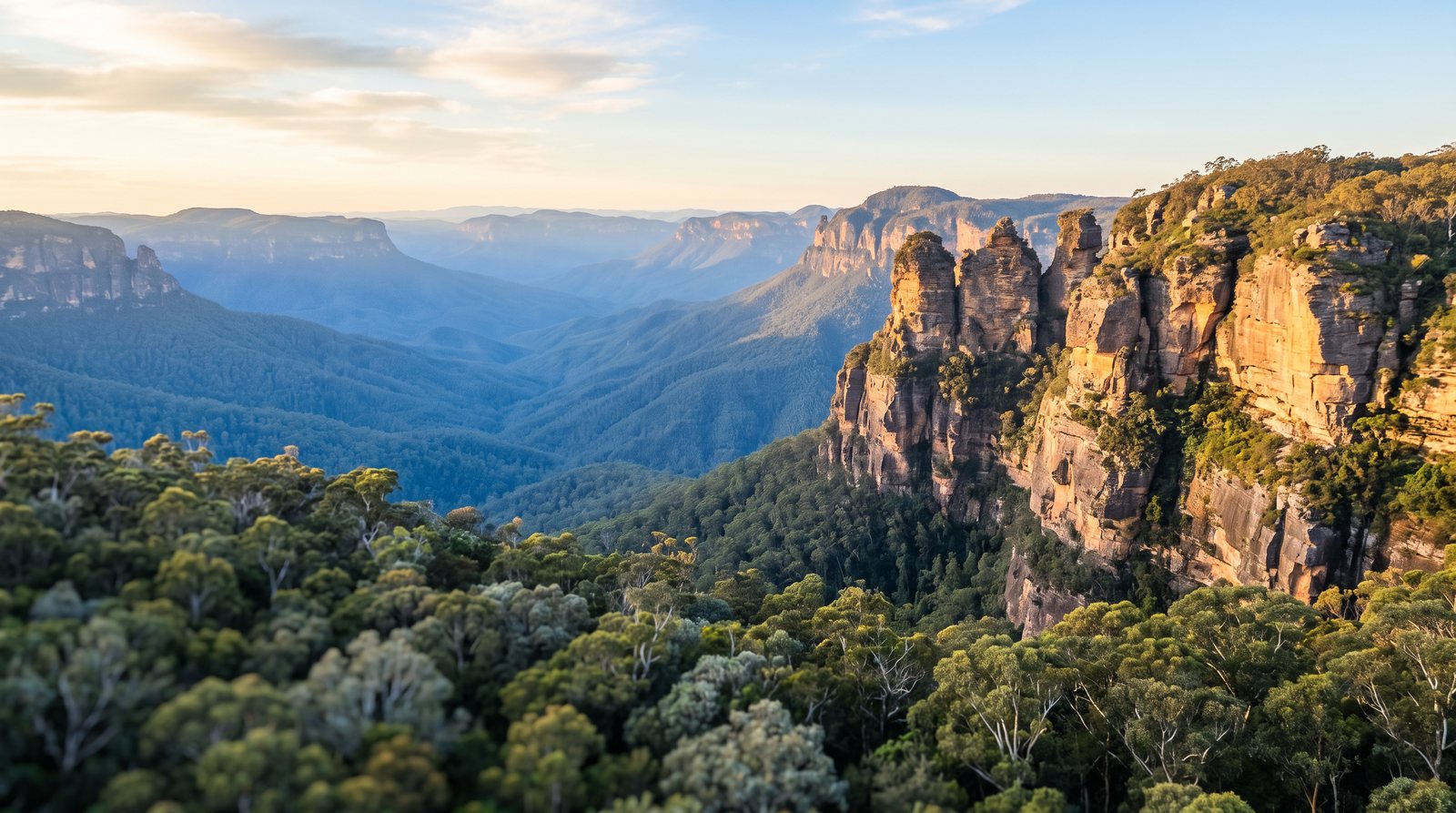
The Blue Mountains National Park covers more than one million hectares of the Greater Blue Mountains World Heritage Area. This vast plateau, dissected by deep gorges and sheer sandstone cliffs, derives its name from a distinctive atmospheric phenomenon. The dense eucalyptus forests release fine droplets of volatile oil, which scatter light and create a pervasive blue haze that softens the horizon. To stand at the edge of the escarpment is to look across a sea of blue-green canopy stretching toward the western interior, a visual testament to the scale of the Australian bush. This is not merely a scenic backdrop but a living ecosystem preserving the geological and biological history of the continent.
At the heart of this wilderness stands the Three Sisters, a trio of weathered sandstone peaks that form the region's defining silhouette. Rising over nine hundred metres above sea level, these pillars are the remnants of a great plateau eroded over millions of years by wind and water. The vertical faces reveal the layered history of the Triassic period, with bands of ironstone creating a textured surface that changes character with the sun. In the early morning, the first rays of light strike the eastern faces, turning the grey stone into a brilliant gold. This transformation draws the eye to the fragility of the stone against the immense void of the Jamison Valley.
Below the towering cliffs of Katoomba lies the Jamison Valley, a profound depression that serves as a reservoir for the park’s dramatic weather patterns. The valley is frequently filled with a thick mist that rolls in from the coast, leaving only the highest peaks visible like islands in a frozen sea. When the mist clears, it reveals a complex topography of hidden ridges, winding creeks, and dense rainforest pockets thriving in the permanent shadows. The scale of the valley creates its own microclimate, where the air is cooler and the silence is punctuated only by falling water or the call of a lyrebird. It is a space that demands a different sense of time.
The park’s verticality is best expressed through its waterfalls and deep canyons, where water has carved intricate paths through the soft sandstone. Wentworth Falls, a spectacular three-tiered cascade, plunges over one hundred metres into the Jamison Valley, its spray supporting delicate ferns along the cliff edges. Further north, the Grand Canyon offers a different encounter, leading visitors down into a narrow, cool-temperate rainforest where the light is filtered through a canopy of ancient coachwood and sassafras trees. The transition from the dry heathlands of the plateau to the damp, emerald depths of the canyon is a striking ecological shift. In these hidden recesses, the sound of the creek becomes a constant companion.
Beyond its geological grandeur, the park is a sanctuary for an extraordinary diversity of flora and fauna, much of which is found nowhere else on Earth. It is home to a vast array of eucalyptus species, each adapted to specific niches within the varied terrain, from the stunted gums of the exposed ridges to the giants of the sheltered gullies. This botanical richness is a remnant of the ancient Gondwanan forests, providing a link to a time when the continent was wetter. The presence of rare and threatened species highlights the park's role as a critical refuge. The intricate web of life here depends on the continued integrity of these large, connected tracts of wilderness.
The network of bushwalking trails is a legacy of early twentieth-century engineering and a human desire to explore the inaccessible. Many paths were originally carved into the cliff faces by hand, using basic tools to create narrow ledges and steep stairways that offer unparalleled views. Walking these trails is a physical engagement with the landscape, requiring a steady pace and an attentive eye. The tracks follow the land's contours, leading from the bustling lookouts near the mountain towns to the quiet, isolated reaches of the Grose Valley. Each step takes the traveler further from the mechanical sounds of the city and closer to the elemental textures of the bush.
The character of the Blue Mountains is fundamentally shaped by the shifting seasons, each bringing new light and atmosphere. In the winter, the air is crisp and clear, providing visibility that stretches for hundreds of kilometres across the coastal plains. Frost often blankets the high-altitude heaths, and a quiet stillness settles over the mountain villages. As spring arrives, the park erupts in a subtle display of wildflowers, with waratahs and banksias providing splashes of colour. The summer months bring a different intensity, with the heat of the day often broken by dramatic afternoon thunderstorms. These seasonal cycles ensure that no two visits to the park are ever truly the same.
The ongoing management of the park by the NSW National Parks and Wildlife Service balances public access with the necessity of conservation. Protecting over a million hectares of rugged terrain requires a constant effort to manage fire risks, control invasive species, and maintain the safety of the extensive trail network. The visitor notes and safety warnings are essential guidance for navigating a landscape that can be as unforgiving as it is beautiful. The preservation of this wilderness is a commitment to future generations, ensuring that the silence of the Jamison Valley remains untarnished by urban development. It is a recognition that some places are too valuable to be measured by anything else.
To visit the Blue Mountains is to step into a landscape that has endured for eons, where the forces of nature are visible in every weathered cliff. The park offers more than just a scenic escape; it provides a profound perspective on our place within the natural world. Whether standing at a crowded lookout or sitting quietly in the depths of a remote canyon, the sense of scale and the weight of time are inescapable. The Blue Mountains remain a vital part of the Australian identity, a World Heritage wilderness that continues to inspire wonder. As the blue haze settles over the valley, it serves as a final reminder of the enduring beauty of the wild.