Coastal destination
Golden sands and historic sandstone heights at Sydney's northernmost coastal tip
Palm Beach serves as a precise geographic terminus where the Pacific Ocean meets the stillness of Pittwater. From the 1881 sandstone lighthouse, the landscape reveals a narrow golden isthmus defined by light, tide, and the enduring Hawkesbury wilderness.
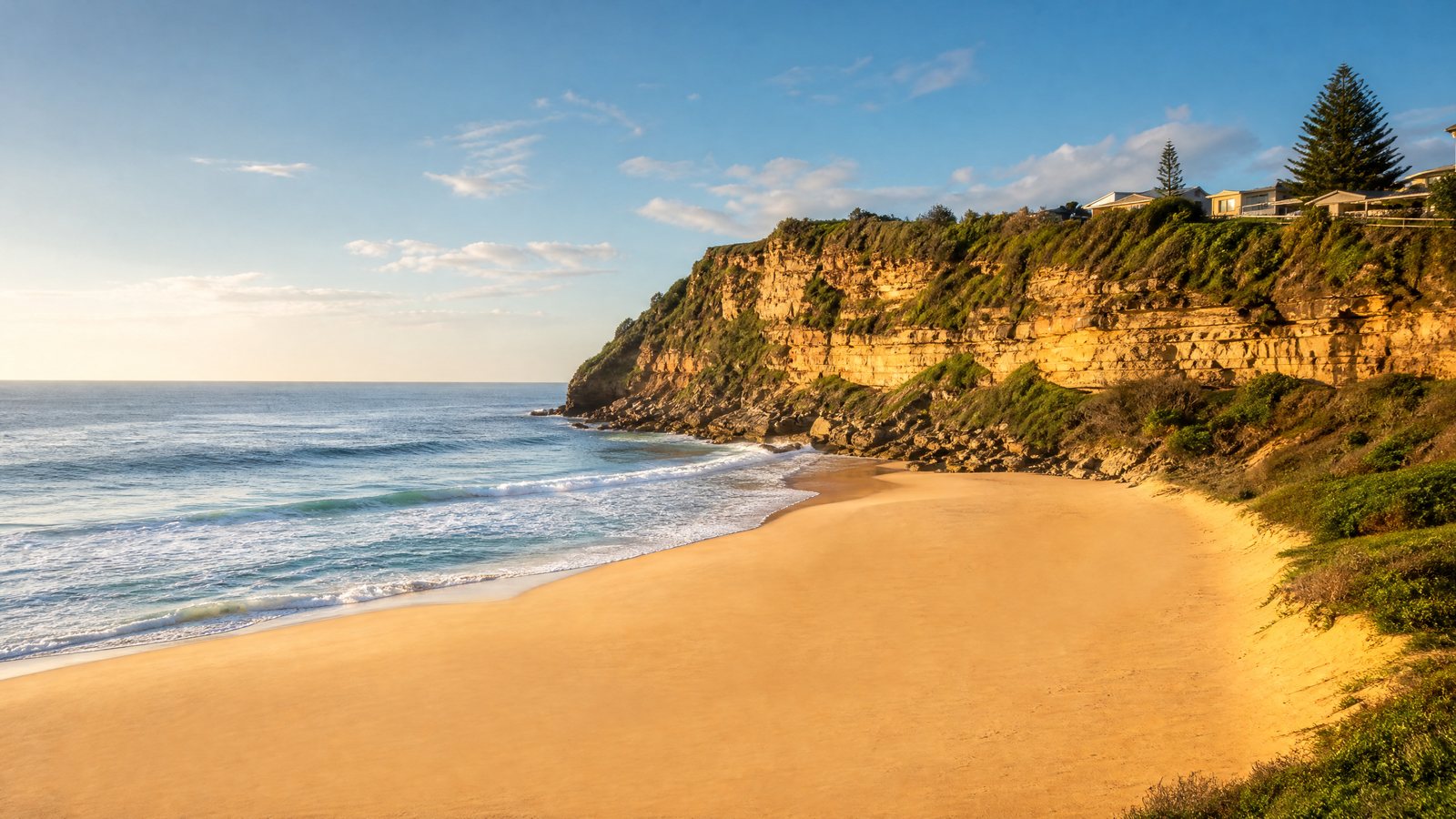
Palm Beach occupies a singular position in the geography of the Sydney coastline, existing not merely as a destination but as a precise terminal point where the urban fabric finally yields to the dominance of the Pacific. This narrow isthmus, a slender golden tether between two distinct bodies of water, creates a landscape of constant environmental dialogue. To the east, the open ocean delivers a rhythmic, high-energy surge that defines the northern surf breaks, while to the west, the tranquil reaches of Pittwater offer a mirrored surface for the yachts and ferries that navigate the Hawkesbury’s tidal estuaries. The experience of the place is governed by this duality, a sense of being caught between the restless motion of the sea and the deep, sheltered stillness of the bay, all within a few hundred meters of sand and coastal scrub.
The northernmost anchor of this landscape is the Barrenjoey Headland, a massive sandstone formation that rises with a quiet, monumental authority above the surrounding dunes. It is a geological sentinel, marking the entrance to Broken Bay and serving as a transition point between the developed coast and the rugged, untouched wilderness of Ku-ring-gai Chase National Park. The climb to the summit follows a path etched into the ancient rock, where the vegetation becomes hardier and the wind carries the salt of the Tasman Sea. From this elevation, the true geometry of the peninsula becomes visible—a delicate balance of land and water that seems almost architectural in its precision. The sandstone itself, weathered by centuries of spray and sun, provides a textured foundation for the historical structures that have long defined this vantage point.
Standing at the peak of the headland is the 1881 Barrenjoey Lighthouse, a structure that exemplifies the functional elegance of nineteenth-century maritime technology. Built from sandstone quarried directly from the site, the lighthouse is more than a navigational aid; it is a permanent marker of human presence at the edge of the continent. Its lantern, once fueled by oil and now automated, has guided generations of vessels through the treacherous waters of the Hawkesbury entrance. The architecture of the lighthouse and its surrounding cottages reflects a period when public infrastructure was designed with both durability and aesthetic restraint. There is a specific clarity to the light here, particularly in the late afternoon when the sun strikes the yellow stone, turning the entire headland into a beacon that is visible for miles across the water.
The eastern fringe of the isthmus is defined by the golden sands of the main beach, a stretch of coastline that captures the raw power of the Pacific. Here, the surf is a constant presence, shaping the shoreline and dictating the pace of life for those who visit. The northern end of the beach is particularly renowned for its breaks, where the interaction between the swell and the sandbars creates a dynamic environment for surfing. This is a landscape of motion, where the air is perpetually misted with salt and the sound of the crashing waves provides a continuous acoustic backdrop. The beach serves as a reminder of the scale of the ocean, a vast and unpredictable force that remains the primary architect of the Sydney North region’s character and form.
In sharp contrast to the ocean’s energy, the western side of the peninsula faces the calm, protected waters of Pittwater. This is a realm of horizontal lines and soft reflections, where the tide moves with a gentle, almost imperceptible rhythm. The shoreline is dotted with small jetties and the white hulls of moored boats, creating a scene that feels distant from the city’s usual density. The Pittwater side offers a different kind of utility—a place for sailing, rowing, and quiet observation. The water here is deep and dark, reaching back into the forested valleys of the national park, and it carries a sense of ancient history, having served as a vital waterway for the local Aboriginal people long before the arrival of the lighthouse or the sophisticated coastal homes that now line the ridges.
The relationship between Palm Beach and Ku-ring-gai Chase National Park is one of proximity and contrast. The park represents a vast, contiguous wilderness that begins where the headland ends, a landscape of deep gullies, hidden creeks, and sandstone plateaus. It provides a necessary counterweight to the refined atmosphere of the beach, offering a glimpse into the original state of the Sydney basin. The ancient Aboriginal rock art found within the park’s boundaries serves as a silent testimony to a much longer timeline of human engagement with this coast. For the modern visitor, the view across the water to the park’s forested headlands is a reminder that the beauty of Palm Beach is inextricably linked to the preservation of the wild spaces that surround it.
At the southern end of the beach, the iconic ocean pool offers a more controlled interaction with the sea. Carved into the rock platform, the pool is a masterpiece of coastal engineering that respects the natural topography of the site. It provides a sanctuary for swimmers when the ocean is too rough, yet it remains fully integrated into the tidal cycle, with waves frequently washing over its edges. The pool’s concrete perimeter has become a social anchor, a place where the community gathers to mark the start or end of the day. The sight of swimmers moving through the clear, salt water against the backdrop of the rising cliffs is a quintessentially local image, capturing the intersection of human recreation and the enduring presence of the natural world.
Ultimately, Palm Beach is a study in the quality of light and the perception of distance. Whether viewed from the height of the lighthouse or the edge of the water, the landscape encourages a slower, more attentive form of looking. It is a place where the details of the environment—the texture of the sandstone, the color of the water, the movement of the wind through the banksias—become the primary focus. As the northernmost tip of Sydney’s coastal reach, it offers a sense of completion, a final point of land that looks out toward the open horizon. In the quiet hours of the evening, when the yachts in Pittwater fall still and the lighthouse begins its nightly rotation, the peninsula feels like a room held open to the elements, a place where the city and the sea find a rare and beautiful equilibrium.