National park
Australia’s second oldest national park where ancient sandstone heritage meets the Hawkesbury’s tidal reaches
Ku-ring-gai Chase National Park preserves a profound intersection of ancient sandstone, tidal waterways, and Aboriginal heritage. On Sydney’s northern edge, this expansive wilderness offers a quiet study in geological endurance and cultural continuity.
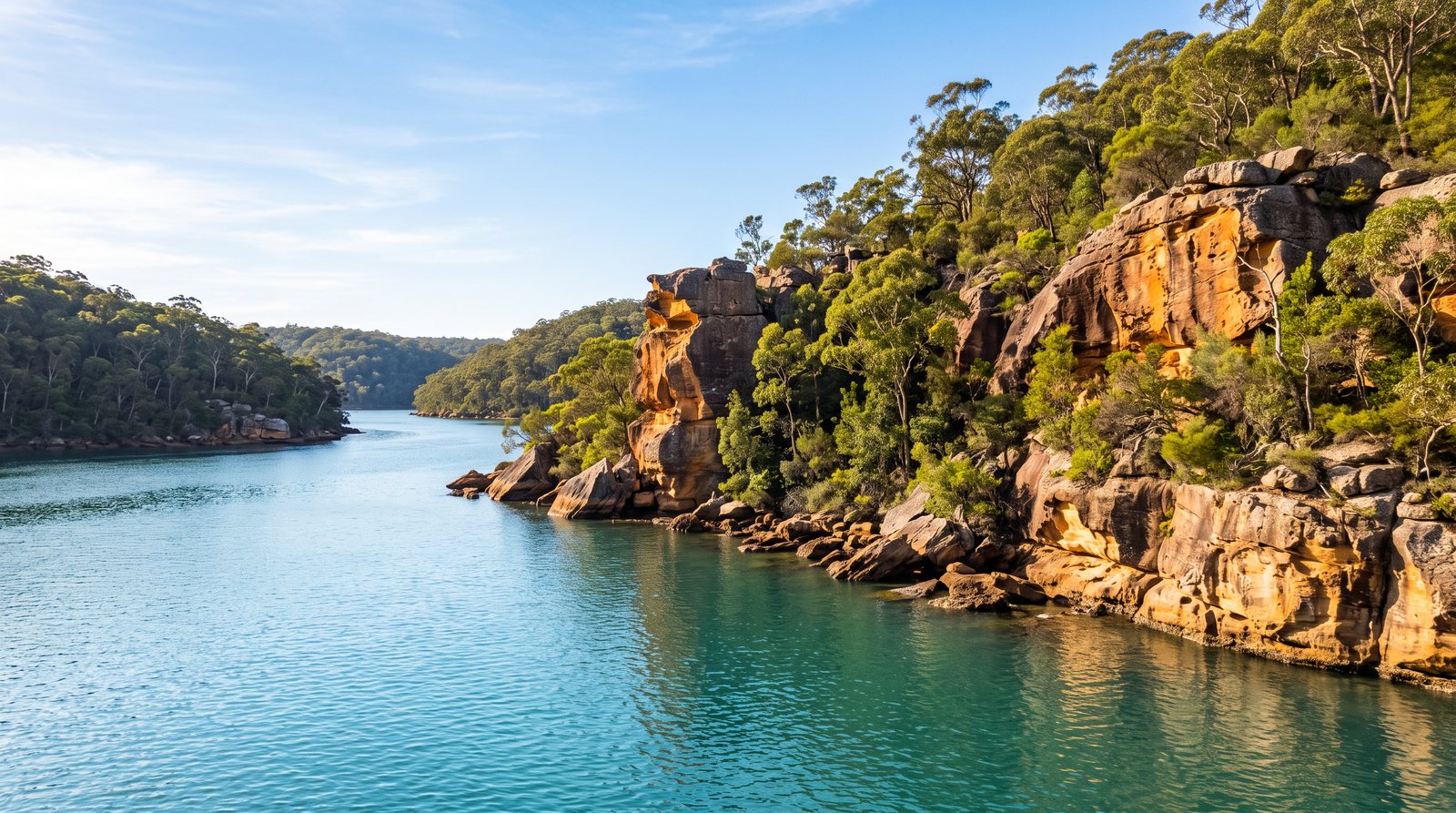
Ku-ring-gai Chase National Park stands as a profound geological and cultural anchor on Sydney’s northern fringe, where the city yields to the rugged authority of the Hawkesbury sandstone. Established in 1894, it is Australia’s second-oldest national park, a testament to an early recognition that this intersection of land and water possessed a value beyond utility. The park encompasses 15,000 hectares of high-plateau bushland, deeply incised by the tidal reaches of the Hawkesbury River, Cowan Water, and Pittwater. It is a landscape defined by its edges—the sharp drop of a sandstone cliff, the transition of a mangrove swamp, and the boundary where salt tide meets fresh runoff. For the visitor, the park offers a rare sense of enclosure, where city sounds are muffled by a dense canopy of eucalypts and the rhythmic pulse of the Pacific.
The physical character of Ku-ring-gai Chase is dictated by the Hawkesbury sandstone, a massive sedimentary formation that has weathered over millions of years into the dramatic escarpments and hidden gullies that define the region. This stone is the primary architect of the park’s atmosphere. Its porous nature allows it to hold the sun's heat, while its fractures provide a foothold for a resilient array of flora. The cliffs, often stained with iron-rich hues of ochre and rust, stand as silent sentinels over the winding waterways. To walk through the park is to move through a vertical history of deposition and erosion, where every overhang and cave tells a story of environmental forces operating on a scale that dwarfs the human lifespan.
Long before its gazettal, this landscape was the home of the Guringai people, whose presence remains etched into the fabric of the sandstone. The park contains one of the richest concentrations of Aboriginal rock art in Australia, with over 800 recorded sites including engravings, stencils, and middens. These works are an enduring dialogue between a people and their environment. The engravings, located on expansive flat sandstone platforms, depict subjects from whales and sharks to wallabies and ancestral figures. They serve as a map of both the physical and spiritual worlds, marking significant sites and recording the deep connection between the Guringai and the land they stewarded for thousands of years. The preservation of these sites ensures that the ancient stories of the Sydney basin remain visible and respected in the contemporary landscape, providing a rare sense of cultural continuity.
The waterways of Ku-ring-gai Chase—Pittwater, Cowan Water, and the Hawkesbury River—provide a fluid contrast to the rigidity of the sandstone plateaus. These are complex drowned river valleys, or rias, created by rising sea levels at the end of the last ice age. The resulting topography is one of intricate bays, steep-sided inlets, and secluded beaches often accessible only by water. The tidal influence is palpable here, bringing the scent of the sea deep into the heart of the bush. These waters are a vital nursery for marine life, with seagrass beds and mangrove forests providing essential habitats. The intersection of these environments creates a dynamic ecosystem where the daily rise and fall of the tide dictates the rhythm of life for countless species.
The flora of the park is a study in adaptation and diversity, with over 1,000 plant species thriving in the varied microclimates of the sandstone country. The high ridges are dominated by open eucalypt forests, where species like the Sydney Peppermint and the Scribbly Gum stand tall. In the deeper, more sheltered gullies, the vegetation shifts toward temperate rainforest, with coachwood and sassafras creating a cool, damp environment that supports a wealth of ferns and mosses. This botanical complexity is matched by the park’s fauna, which includes a wide array of mammals, reptiles, and birds. The calls of the lyrebird and the powerful owl are common sounds, serving as reminders of the park’s role as a critical sanctuary for biodiversity in an urbanized region.
Human interaction with the park has evolved since the late 19th century, transitioning from early colonial exploration to a model of conservation and recreation. Bobbin Head, located at the junction of Cockle and Cowan Creeks, serves as the historic heart of the park’s recreational life. The development of picnic grounds, marinas, and walking tracks in the early 20th century reflected a growing public desire to engage with the natural world. The architecture of the older park buildings, often constructed from local sandstone, blends into the landscape, embodying an early aesthetic of environmental integration. Today, Bobbin Head remains a popular destination for families and boaters, offering a gateway to the park’s interior. The challenge for modern park management lies in balancing this high level of public access with the need to protect the fragile ecosystems and cultural sites that make Ku-ring-gai Chase unique.
One of the most iconic vantage points in the park is West Head Lookout, which offers a panoramic view that encapsulates the intersection of the park with the wider world. From this sandstone platform, the eye travels across the deep blue expanse of Pittwater to the Barrenjoey Headland and the Tasman Sea beyond. To the north, the broken coastline of the Central Coast is visible, while the rugged hills of the park stretch out in every other direction. It is a view that provides a profound sense of scale, highlighting the park’s position as a vast green lung on the edge of a global city. Standing at West Head, one is struck by the layering of history—geological, Aboriginal, colonial, and modern—all coexisting within a single frame. The lookout is also a place of historical reflection, with nearby battery sites serving as reminders of the park’s strategic importance during the Second World War.
The enduring legacy of Ku-ring-gai Chase National Park lies in its ability to remain a place of quietude and reflection. It is a landscape that demands a slower pace of engagement, rewarding those who take the time to explore its hidden tracks and silent waterways. The park’s significance extends beyond its boundaries, serving as a vital link in a chain of protected areas that surround Sydney, ensuring that the natural heritage of the region is preserved for future generations. As the city grows, the value of this wilderness only increases, providing a necessary counterpoint to the intensity of urban life. Ku-ring-gai Chase is not just a park; it is a living archive of the earth’s history and a testament to the enduring power of the natural world to inspire and restore. Its preservation is a commitment to the idea that some places are too precious to be altered, and that this beauty is a heritage worth protecting.