National park
Coastal cliffs and ancient heritage at the world's second-oldest national park
Established in 1879 as the world's second-oldest national park, this 15,000-hectare sanctuary south of Sydney preserves a dramatic coastline of sandstone cliffs, ancient Dharawal rock art, and diverse ecosystems ranging from heathland to rainforest.
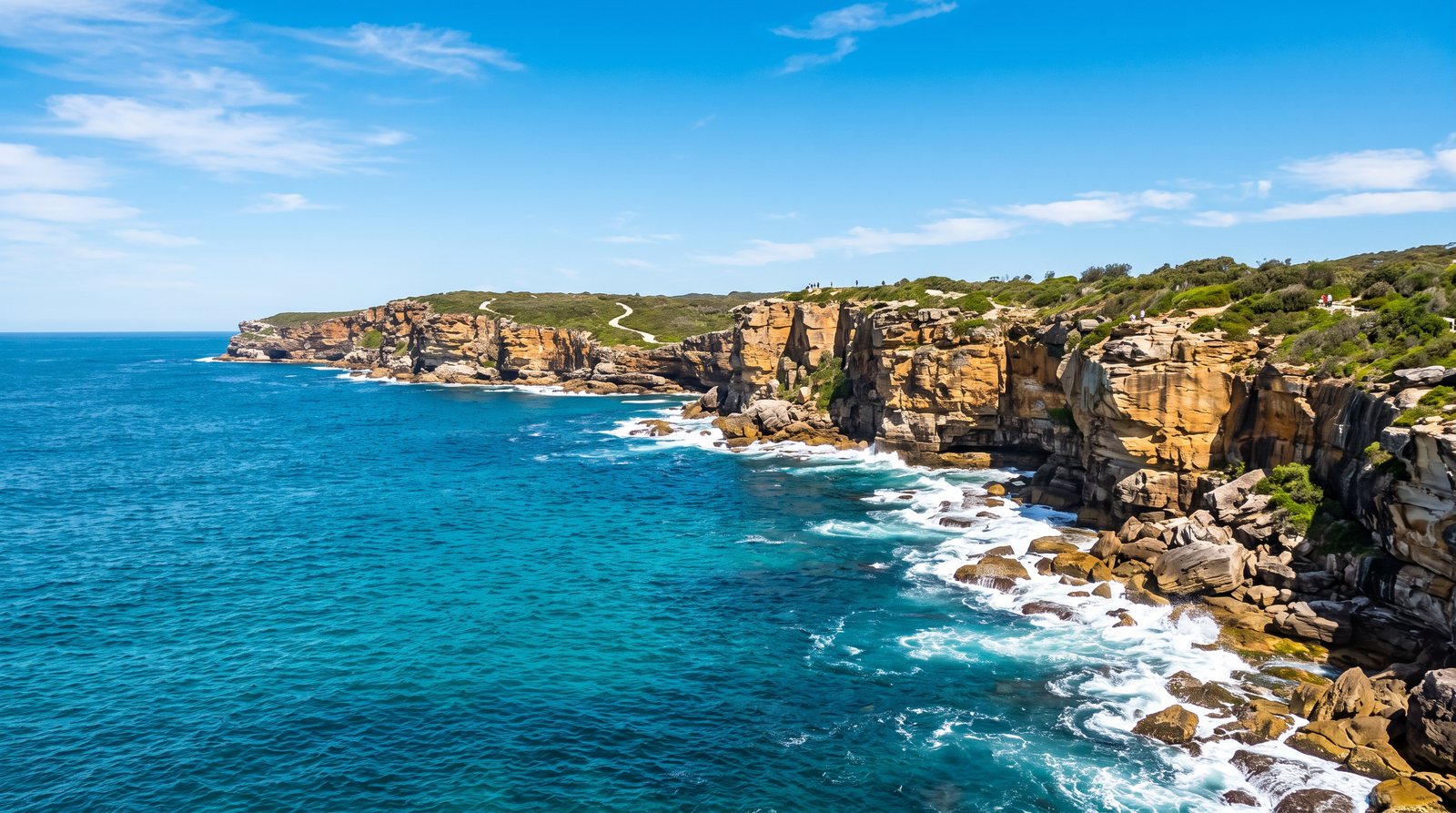
The establishment of the Royal National Park on April 26, 1879, marked a pivotal moment in the global history of environmental conservation. Proclaimed by Sir John Robertson, the Acting Premier of New South Wales, it stands as the world’s second-oldest national park, following only Yellowstone. In the late nineteenth century, the "national park" was an emerging Victorian ideal, envisioned as a "national domain" for the health of Sydney’s growing population. Originally named "The National Park," it received its "Royal" prefix in 1955 after the visit of Queen Elizabeth II. This early designation reflected a growing awareness that colonial expansion required a deliberate counter-balance—a sanctuary where the landscape could remain untouched by the industrial development then reshaping the Australian continent [1].
Geologically, the park is defined by the Hawkesbury sandstone plateau, sculpted over millions of years into dramatic coastal scenery. The interaction between this ancient sedimentary rock and the Tasman Sea has created a coastline of stark, vertical cliffs and hidden coves. The sandstone, composed of quartz grains cemented by silica and iron minerals, provides a rugged foundation for the park's diverse topography. At the plateau's edges, the land drops precipitously into the ocean, creating vantage points where the Pacific horizon becomes overwhelming. This geological narrative is most visible at landmarks like Eagle Rock, a sandstone formation resembling a bird of prey, and Curracurrong Falls, where two streams plunge directly over the cliff face into the sea—a rare phenomenon known as a tidefall waterfall [1].
Before European settlement, the region was the ancestral home of the Dharawal people, whose connection to the land spans tens of thousands of years. The park serves as a repository of Aboriginal cultural heritage, with over a thousand recorded sites including middens and rock shelters. The most profound of these are the rock engravings at Jibbon Head, near Bundeena. These petroglyphs, carved into flat sandstone platforms, depict whales, stingrays, and kangaroos, serving as a permanent record of the Dharawal’s relationship with the coastal environment. The preservation of these sites allows for a continuity of memory, ensuring that the ancient stories of the land remain legible to contemporary visitors who walk the same paths [1].
> "The Royal National Park rewards a considered visit: give the landscape, local culture, or heritage setting enough time to reveal its character."
The most comprehensive way to experience this landscape is via the Coast Track, a 26-kilometer traverse from Bundeena to Otford. The track is a journey through shifting ecological zones, beginning along exposed heathlands where vegetation is stunted by salt spray and high winds. As the path winds southward, it descends into pockets of temperate rainforest and palm jungles, particularly around the Hacking River and sheltered gullies. The sensory experience changes with the terrain: the sharp, ozonic scent of the ocean gives way to the damp, earthy aroma of the forest floor, and the roar of the surf is replaced by the calls of lyrebirds and the rustle of Cabbage Tree palms [1].
Central to the park’s appeal are its unique water features, bridging the gap between terrestrial and marine environments. Wattamolla Beach offers a rare combination of a freshwater lagoon, a sandy beach, and a waterfall, making it a focal point for visitors. Further south, the Figure Eight Pools have become a modern icon, though they serve as a reminder of the inherent dangers of the coast. These naturally formed circular rock pools, carved into the intertidal rock shelf, are only accessible at low tide and low swell. The NSW National Parks and Wildlife Service (NPWS) emphasizes that visitors must exercise extreme caution, as the shelf is frequently swept by unpredictable waves, highlighting the tension between the park’s beauty and its untamed nature [1].
| Landmark | Primary Feature | Significance | | :--- | :--- | :--- | | **Jibbon Head** | Aboriginal Rock Engravings | Ancient Dharawal cultural heritage and whale depictions. | | **Eagle Rock** | Sandstone Formation | Iconic geological silhouette resembling a bird of prey. | | **Curracurrong Falls** | Tidefall Waterfall | Rare instance of fresh water plunging directly into the sea. | | **Wattamolla** | Lagoon and Beach | Unique intersection of fresh and salt water ecosystems. | | **Figure Eight Pools** | Intertidal Rock Pools | Naturally occurring geometric formations on the rock shelf. | | **Garie Beach** | Surf Beach | Popular destination for surfing and coastal photography. |
The biodiversity of the park is a testament to its status as a sanctuary within a major metropolitan area. The park supports a vast array of flora and fauna, including over 300 species of birds and a diverse population of mammals and reptiles. During winter, coastal lookouts become prime locations for observing the annual migration of humpback whales traveling north. On land, the vegetation is equally varied, featuring salt-tolerant coastal banksias, gymea lilies, and towering eucalypts. This ecological variety is maintained through careful management practices, including controlled burns and weed eradication programs, ensuring the park remains a viable habitat for species displaced from other parts of the Sydney basin [1].
Managing a park of this scale requires a delicate balance between public access and environmental preservation. As Australia’s first national park, the Royal has often served as a testing ground for conservation policy. The implementation of a daily vehicle entry fee is a practical measure to fund the maintenance of extensive trail networks and visitor facilities, while encouraging a sustainable approach to tourism. The NPWS provides constant updates regarding weather conditions, track closures, and fire risks, emphasizing the shared responsibility in protecting the park’s integrity. This stewardship ensures that the "national domain" envisioned by Sir John Robertson in 1879 continues to function as a public asset without compromising its ecological health [1].
Ultimately, the Royal National Park stands as a living monument to the enduring value of protected wilderness. It is a place where the deep time of geology and the ancient history of the Dharawal people intersect with the modern desire for connection with the natural world. Whether standing on the wind-swept heights of the Coast Track or resting in the quiet shade of a rainforest gully, the park offers a profound sense of perspective. It serves as a reminder that the preservation of the landscape is not merely a matter of policy, but an act of care for the future. As the world’s second-oldest national park, it continues to provide a vital breathing space for Sydney, proving that the vision of 1879 remains as relevant today as it was nearly a century and a half ago [1].
**References** [1] [Royal National Park | NSW National Parks and Wildlife Service](https://www.nationalparks.nsw.gov.au/visit-a-park/parks/royal-national-park)