National park
The shimmering waterway where urban grandeur meets ancient coastal wilderness
Sydney Harbour National Park preserves a mosaic of secluded beaches, sandstone cliffs, and historic islands. From military relics to ancient Aboriginal rock art, it offers a profound connection to both the city's pulse and its deep natural history.
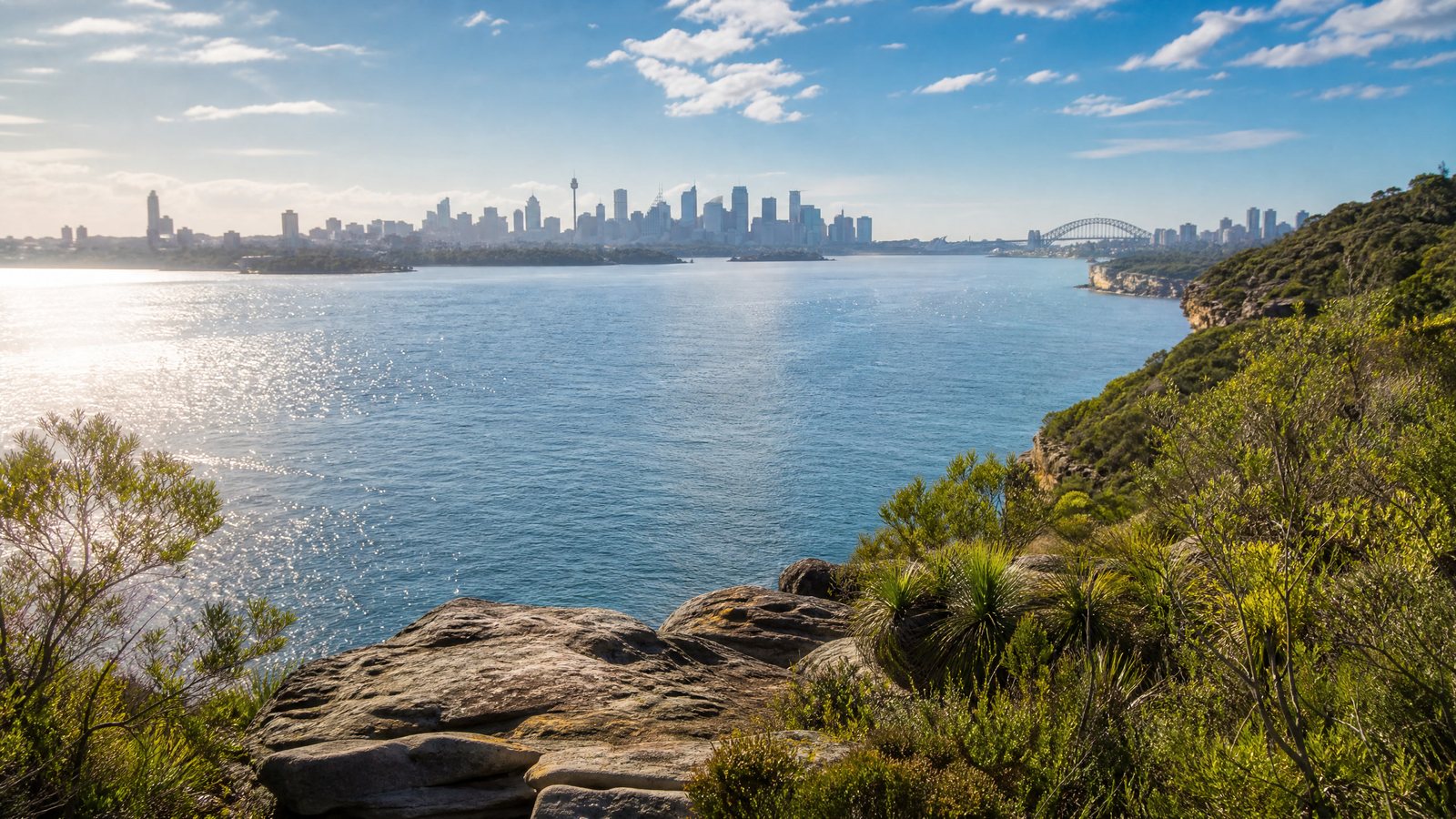
Sydney Harbour National Park exists as a deliberate interruption in the urban fabric of Australia’s largest city, protecting a fragmented but vital mosaic of islands and foreshore. While the harbour is globally recognized for its modern architectural icons, the national park serves as a steward for the landscape that preceded the metropolis: a world of weathered sandstone, resilient salt-scrub, and deep-water ecology. The park’s boundaries are not contiguous, instead appearing as a series of green headlands and rocky outcrops that frame the waterway, offering a physical record of the harbour’s transition from a wild coastal estuary to a global maritime hub. This preservation ensures that even as the city grows, the fundamental character of the Sydney basin—its dramatic topography and intricate shoreline—remains accessible as a public common rather than a private vista.
The human history of the harbour begins tens of thousands of years before the arrival of the First Fleet, with the land and water sustaining the Eora and Guringai people. Throughout the park, hidden Aboriginal rock art and shell middens provide silent testimony to this enduring connection, marking the harbour as a site of profound cultural and spiritual significance. These sites are not merely archaeological relics but are part of a living landscape that continues to be managed with respect for its traditional custodians. From the carvings on the sandstone platforms at North Head to the ancient names of the islands, such as Me-Mel for Goat Island, the park preserves the nomenclature and physical traces of a culture that understood the harbour’s seasonal rhythms and ecological limits long before the first stone of the modern city was laid.
The islands of Sydney Harbour, scattered like stepping stones across the waterway, represent some of the park’s most distinct and historically layered environments. Me-Mel, or Goat Island, served various roles from a convict-era gunpowder magazine to a police station and shipyard, its sandstone buildings standing as a stark reminder of the colony’s early industrial and carceral history. Further east, Clark and Shark Islands offer a different perspective, having transitioned from colonial vegetable gardens and quarantine stations into tranquil public picnic grounds. These islands provide a unique vantage point from which to observe the city, effectively isolating the visitor from the noise of the streets while remaining within sight of the skyline, creating a sense of being adrift in history.
The strategic importance of the harbour’s headlands is evident in the extensive military fortifications that remain etched into the landscape at Middle Head, Georges Head, and Bradleys Head. These sites were developed throughout the nineteenth and twentieth centuries to protect the growing colony from perceived naval threats, resulting in a complex network of underground tunnels, gun emplacements, and observation posts. Today, these concrete and sandstone structures are being reclaimed by the surrounding bushland, serving as evocative monuments to a period of maritime anxiety. The preservation of these sites allows visitors to trace the evolution of defensive technology, from the heavy muzzle-loading guns of the Victorian era to the sophisticated radar and searchlight installations of the Second World War.
Ecologically, the park protects rare pockets of Sydney’s original coastal vegetation, including the iconic Sydney red gums and Port Jackson figs that once dominated the region. These bushland remnants provide a critical sanctuary for native wildlife that has largely been displaced by suburban development, from the small colony of little penguins at North Head to the various species of honeyeaters and lorikeets that frequent the flowering banksias. During the winter months, the park’s high lookouts at South Head and North Head become premier vantage points for observing the annual migration of humpback whales as they travel north along the coast. This biological diversity serves as a reminder that the harbour is not just a scenic backdrop for human activity, but a functioning ecosystem that requires active management to survive the pressures of its urban surroundings.
The maritime heritage of the harbour is perhaps most vividly embodied by the Hornby Lighthouse at South Head, its distinctive red and white vertical stripes marking the treacherous entrance to the port. Built in 1858 following the tragic wreck of the Dunbar, the lighthouse stands as a sentinel over the Gap, where the calm waters of the harbour meet the powerful swells of the Pacific Ocean. The South Head Heritage trail allows visitors to walk past the lighthouse and the former keepers' cottages, offering a glimpse into the isolated lives of those who once maintained the harbour’s safety. This connection between the natural danger of the coastline and the technological efforts to navigate it is a recurring theme throughout the park, where the beauty of the sandstone cliffs is often tempered by the history of maritime disaster and survival.
Recreational access to the foreshore is facilitated by a network of walking tracks that rank among the most spectacular in the world, such as the Hermitage Foreshore track and the walk from Bradleys Head to Chowder Bay. These paths allow the public to traverse the edge of the water, passing through secluded beaches like Milk Beach and protected swimming spots like Nielsen Park. The design of these tracks often follows the natural contours of the land, providing a sense of immersion in the landscape that belies the proximity of the city. By maintaining these routes, the park ensures that the experience of the harbour remains a democratic one, where the simple act of walking along the shore provides a profound sense of place and a connection to the natural heritage of the region.
Ultimately, Sydney Harbour National Park functions as a vital repository of the city’s identity, holding the stories of its first inhabitants, its colonial struggles, and its environmental resilience. It is a place where the grandeur of the urban skyline is constantly measured against the permanence of the sandstone and the shifting light on the water. The park does not merely preserve the past; it provides a necessary space for the present, offering a sanctuary for both wildlife and people in an increasingly dense urban environment. As the harbour continues to evolve, the stewardship of these islands and foreshores remains a critical commitment to ensuring that the ancient coastal wilderness that first defined this place is never entirely lost to the progress of the city around it.